
Beyond Moving Cargo. Building an Industry.
When people think about maritime, they usually think about ships.
Others think about ports.
Some think about containers.
Very few think about the services that make global shipping possible.
Yet this is where some of the greatest value in the maritime economy is created.
A vessel may sail through African waters.
Its cargo may be destined for African markets.
Its crew may call at African ports.
But the insurance may be arranged in London.
The financing may come from Singapore.
The shipbroker may be in Athens.
The legal dispute may be settled in Dubai.
The vessel may be classified in Europe.
The digital platform managing its voyage may be headquartered elsewhere.
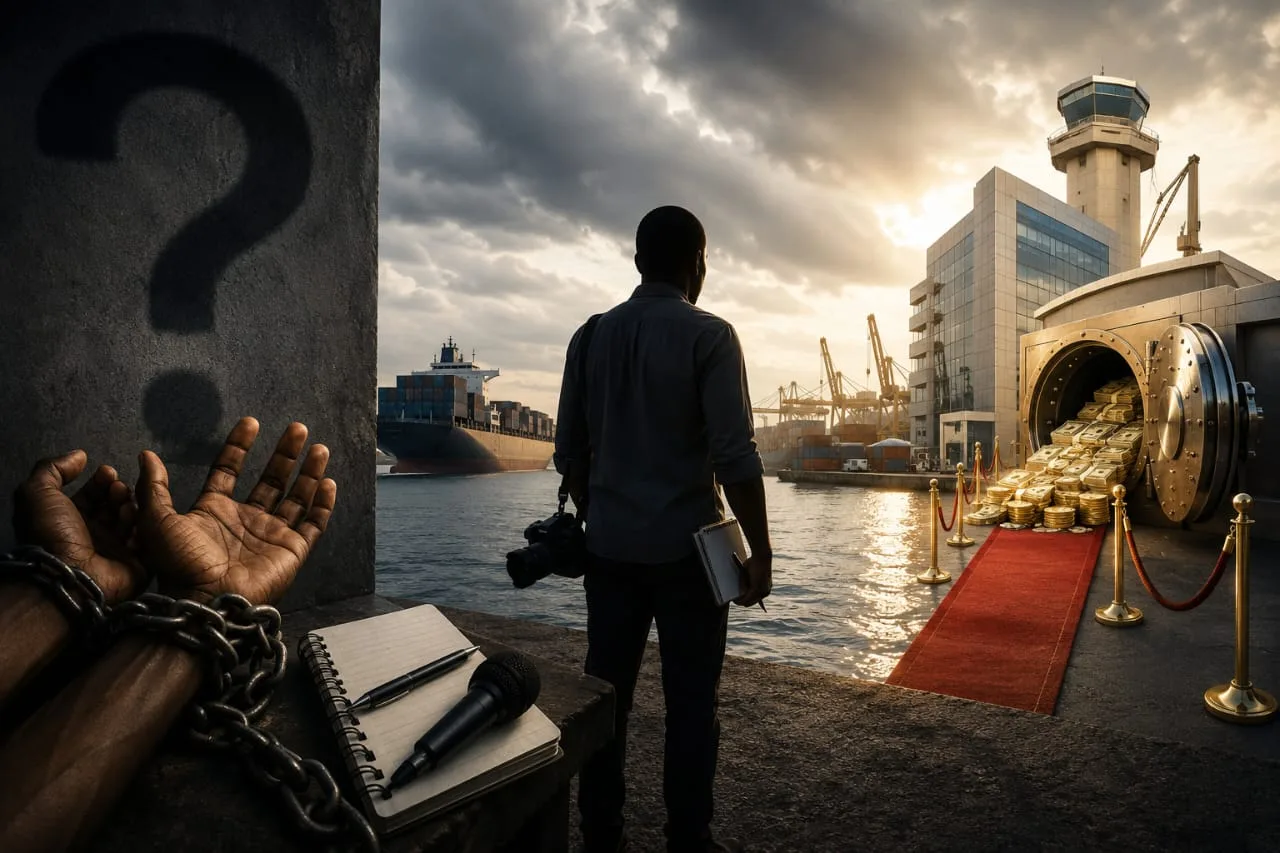
The cargo passes through Africa.
The value does not.
This is one of the least discussed gaps in Africa's Blue Economy.
For decades, Africa has focused on facilitating trade.
The next frontier is enabling trade.
That means building industries around maritime services—not simply infrastructure.
A globally competitive maritime ecosystem is built on more than ports. It is built on institutions, expertise, finance, technology, regulation, and professional services.
Imagine an Africa where:
- Marine insurance is underwritten by African firms.
- Shipbrokers negotiate regional and international chartering deals.
- Maritime financial institutions finance African fleets.
- Arbitration centres resolve commercial disputes on the continent.
- Classification societies certify vessels to global standards.
- African technology companies develop digital solutions for ports, shipping, customs, and logistics.
These industries create high-value jobs.
They generate exportable expertise.
They attract investment.
Most importantly, they enable Africa to capture value long after a ship leaves the harbour.
The opportunity is significant.
Africa sits astride some of the world's busiest maritime trade routes and depends on shipping for the overwhelming majority of its international trade. The continent is also home to a young and growing workforce, expanding financial markets, and a rapidly evolving digital economy.
The ingredients already exist.
What remains is connecting them through deliberate policy, regional cooperation, investment in skills, and stronger institutions.
The future of African maritime competitiveness will not be determined solely by the number of ports we build.
It will be determined by the number of globally competitive maritime businesses we build around those ports.
- Infrastructure enables trade.
- Services multiply value.
- Ownership creates prosperity.
The countries that dominate global maritime do all three.
Africa can too.
The question is no longer whether Africa should participate in global shipping.
The question is whether Africa is ready to own more of the business that surrounds it.
Because the greatest opportunity may not lie in moving more cargo.
It may lie in owning more of the maritime economy.
That is how Africa moves from being a participant in global trade to becoming a global maritime powerhouse.