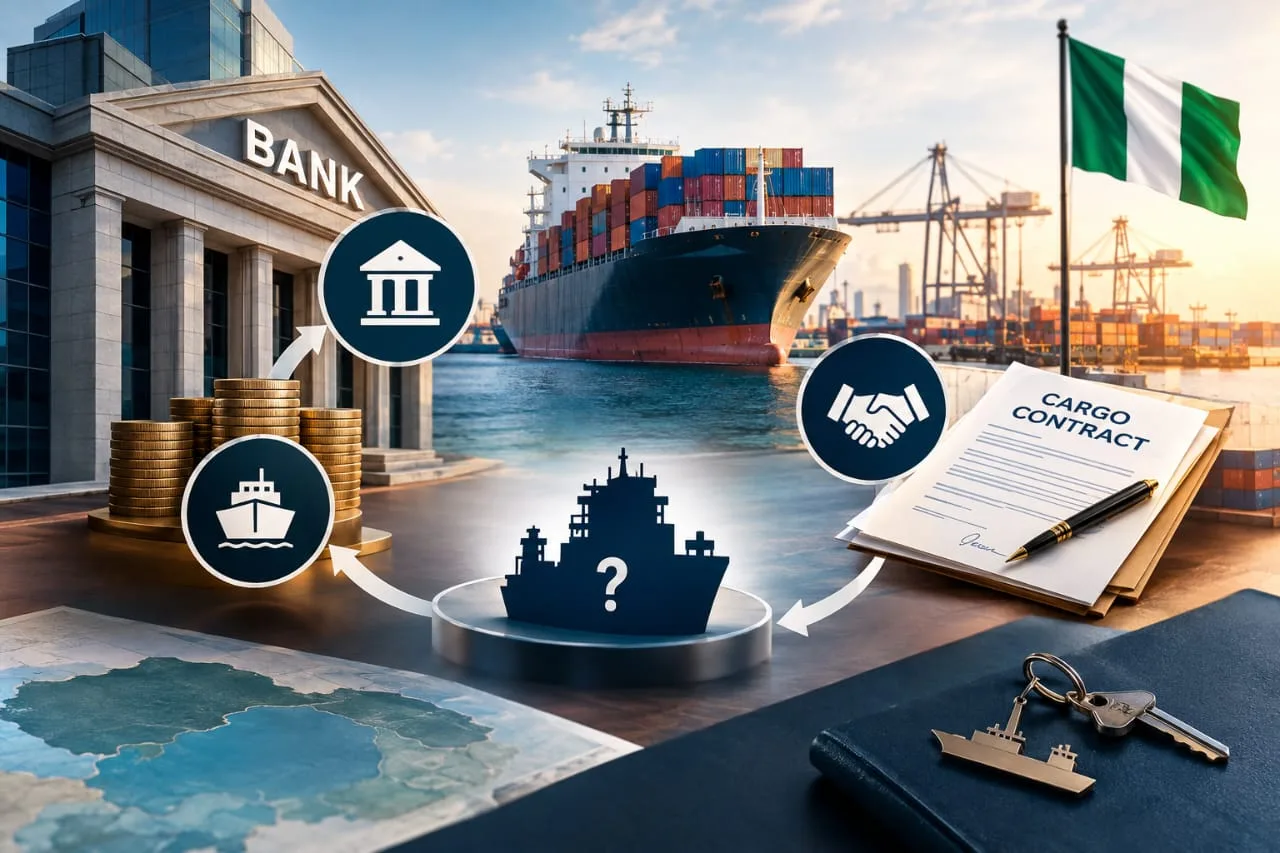

Why Maritime Law Is Becoming Africa's Next Competitive Advantage
Africa is investing billions of dollars in ports, shipping corridors and blue economy infrastructure.
But one of the continent's most valuable maritime assets cannot be built with concrete, steel or dredgers.
It is law.
While governments compete to modernise ports, expand terminal capacity and strengthen maritime security, the legal systems that underpin trade, investment and dispute resolution have received far less attention.
That is beginning to change.
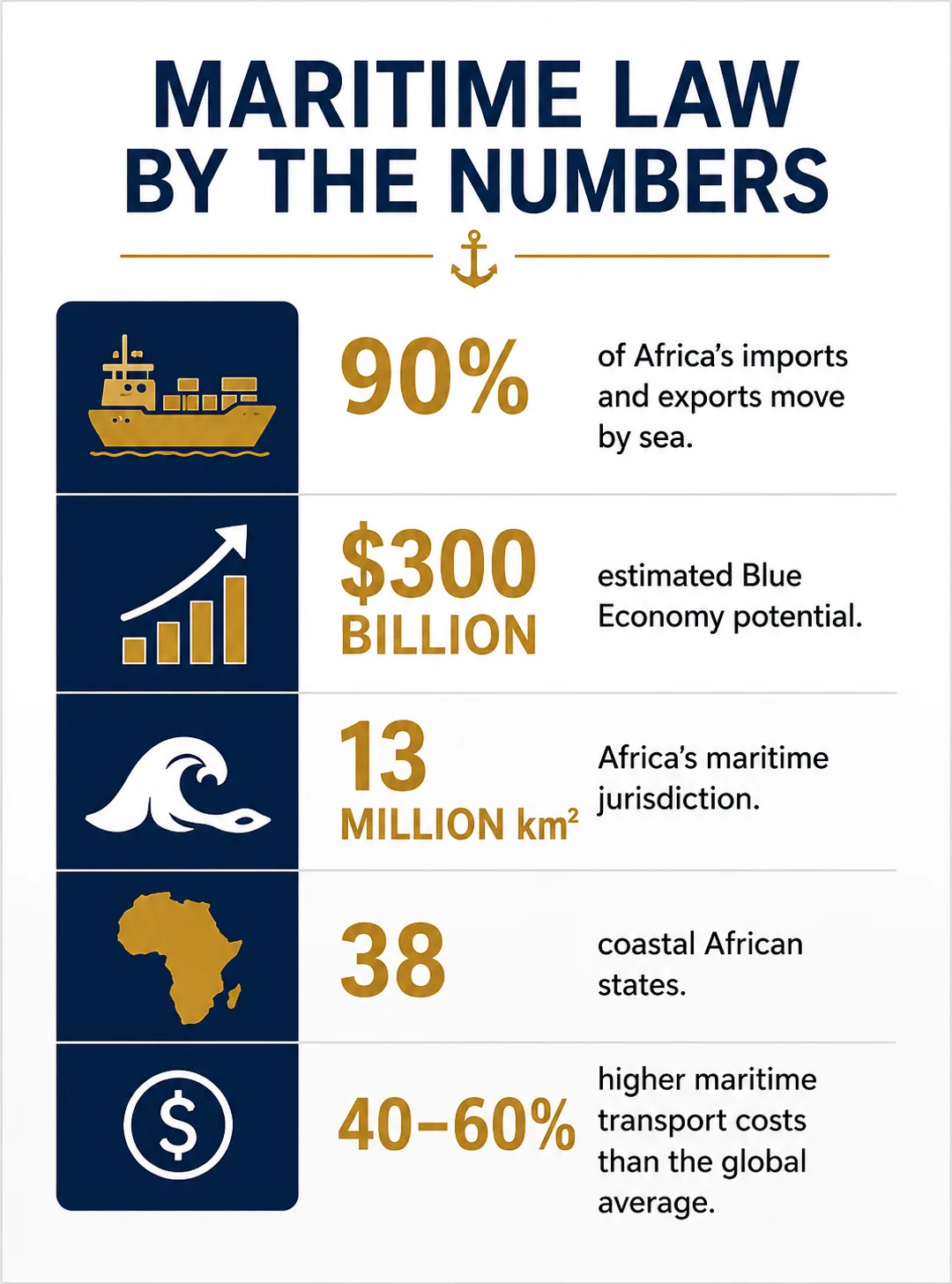
As Africa advances the African Continental Free Trade Area (AfCFTA) and seeks to unlock an estimated US$300 billion Blue Economy, maritime law is emerging not simply as a regulatory necessity but as a strategic economic asset.
The next phase of Africa's maritime competitiveness will be determined not only by the efficiency of its ports, but by the certainty, credibility and harmonisation of the legal systems that govern them.
Law Is Economic Infrastructure
More than 90% of Africa's international trade moves by sea.
Every shipment, vessel financing agreement, marine insurance policy, cargo claim, charter party and port operation depends on legal certainty.
Ports facilitate commerce. Law sustains it.
Without predictable legal frameworks, even the most modern ports become efficient gateways serving uncertain markets.
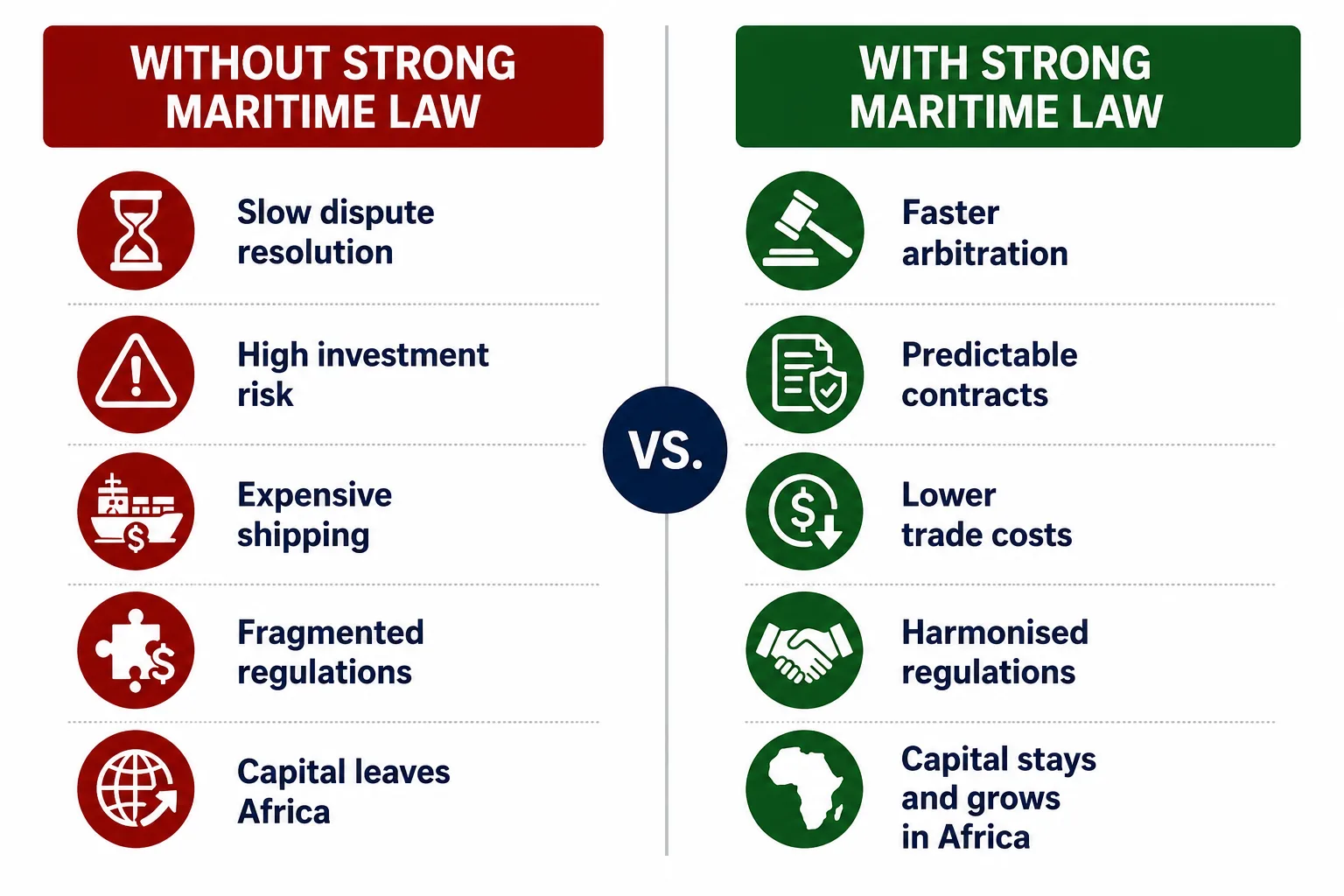
When legal systems are fragmented, inconsistent or difficult to enforce, investment slows, disputes multiply and the cost of doing business rises.
For Africa, strengthening maritime law is no longer simply a legal reform agenda.
It is an economic competitiveness strategy.
The High Cost of Legal Uncertainty
Africa's 38 coastal states operate under significantly different maritime legal systems.
While many have adopted elements of international maritime conventions, implementation and enforcement remain uneven.
The economic consequences are substantial.
Maritime transport costs across Africa remain between 40% and 60% higher than the global average, driven not only by infrastructure constraints but also by regulatory inconsistencies, lengthy dispute resolution processes and legal uncertainty.
For investors evaluating vessel financing, port development, marine insurance or offshore energy projects, legal predictability is often as important as commercial opportunity.
Capital rarely fears geography.
It fears uncertainty.
In maritime commerce, investors can tolerate distance far more easily than they can tolerate legal unpredictability.
AfCFTA Changes the Rules
The implementation of AfCFTA fundamentally changes the conversation.
As intra-African trade expands, legal compatibility between African jurisdictions becomes increasingly important.
Cargo moving seamlessly across borders requires far more than efficient customs procedures.
It requires harmonised rules governing:
- Maritime contracts
- Ship registration
- Cargo liability
- Marine insurance
- Ship mortgages
- Judicial sales
- Maritime arbitration
- Environmental compliance
Without greater legal alignment, Africa risks building integrated markets on fragmented legal foundations.
That contradiction could undermine many of AfCFTA's expected gains.
Security Starts With the Rule of Law
Maritime security is often viewed through the lens of naval patrols, surveillance systems and military capability.
Yet sustainable maritime security begins with enforceable legal frameworks.
Piracy, armed robbery at sea, illegal fishing, oil theft, trafficking and environmental crimes cannot be effectively addressed without modern legislation, specialised courts and coordinated regional enforcement.
Initiatives such as the Yaoundé Code of Conduct and Nigeria's Deep Blue Project demonstrate that governance and enforcement are becoming as important as physical security assets.
Security ultimately depends not only on the ability to intercept maritime crime but also on the ability to prosecute it.
Why Arbitration Is Africa's Next Competitive Tool
Global shipping increasingly relies on arbitration because commercial disputes demand speed, confidentiality and technical expertise.
Yet many African maritime disputes continue to be resolved outside the continent.
That represents more than a legal challenge.
It represents economic value leaving Africa.
Developing credible regional maritime arbitration centres, improving enforcement of arbitral awards and ratifying modern international conventions could significantly reduce the time and cost of resolving shipping disputes while positioning African jurisdictions as trusted centres for maritime commerce.
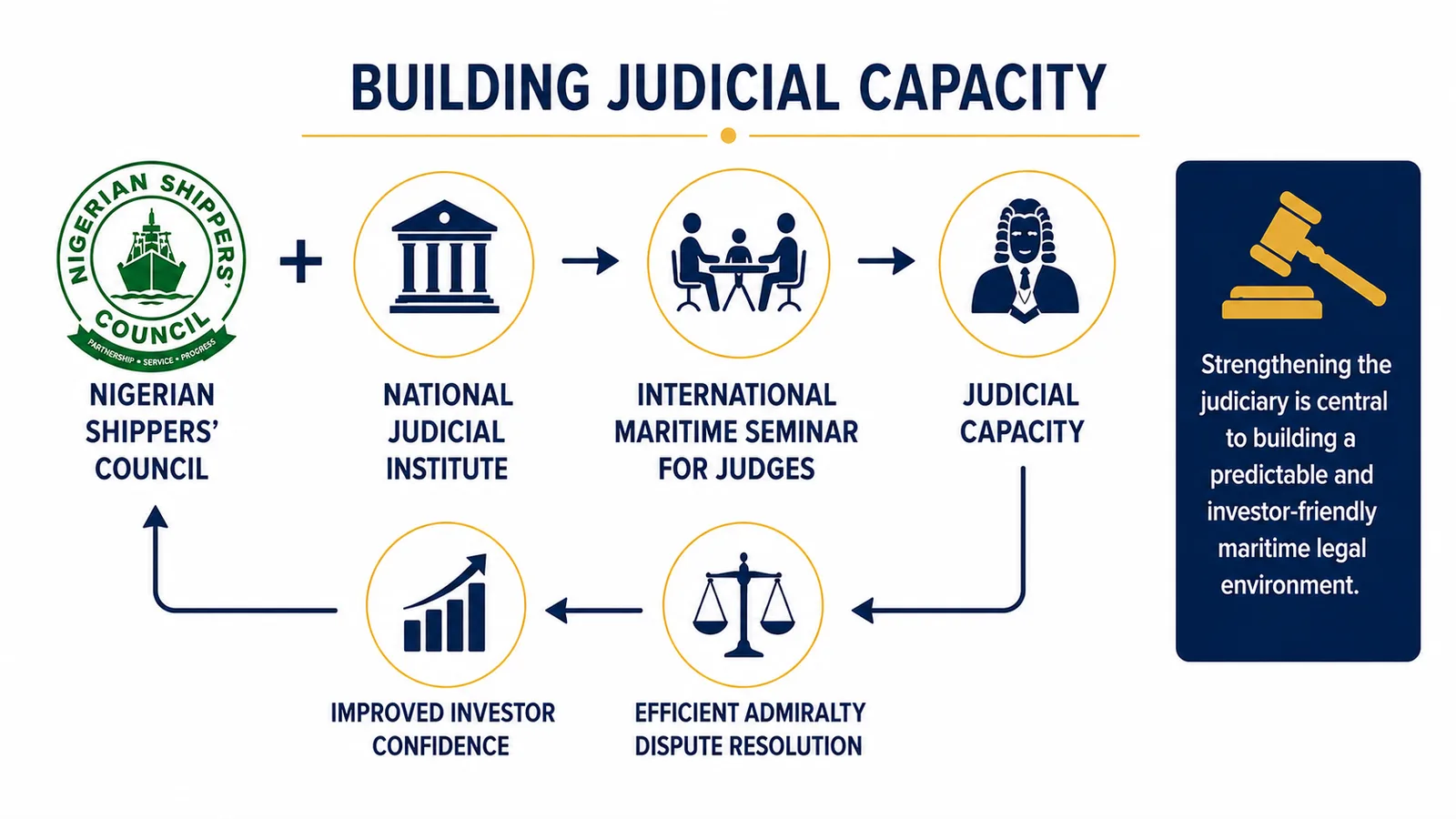
Building judicial capacity is equally important.
In Nigeria, the Nigerian Shippers' Council, in partnership with the National Judicial Institute, convenes the biennial International Maritime Seminar for Judges to strengthen judicial expertise in admiralty law and improve the efficient resolution of maritime disputes.
The initiative recognises an increasingly important reality:
Modern maritime commerce depends not only on strong legislation but also on judges equipped to interpret and enforce maritime law consistently, fairly and within commercially reasonable timelines.
As Africa positions itself as a more competitive maritime destination, investments in judicial capacity may prove just as valuable as investments in ports, vessels and logistics infrastructure.
Maritime Law Is the New Economic Diplomacy
Global supply chains are changing.
Countries are now competing not only through infrastructure, but through governance.
The jurisdictions attracting long-term maritime investment are increasingly those offering transparent regulation, enforceable contracts, efficient courts and internationally recognised dispute resolution mechanisms.
In effect, legal certainty is becoming a form of economic diplomacy.
For Africa, this presents a strategic opportunity.
The countries that modernise their maritime legal frameworks today will be better positioned to attract shipping investment, maritime finance, logistics services and emerging blue economy industries tomorrow.
From Regulation to Competitive Advantage
Maritime law should no longer be viewed solely as a mechanism for compliance.
It is becoming an instrument of competitiveness.
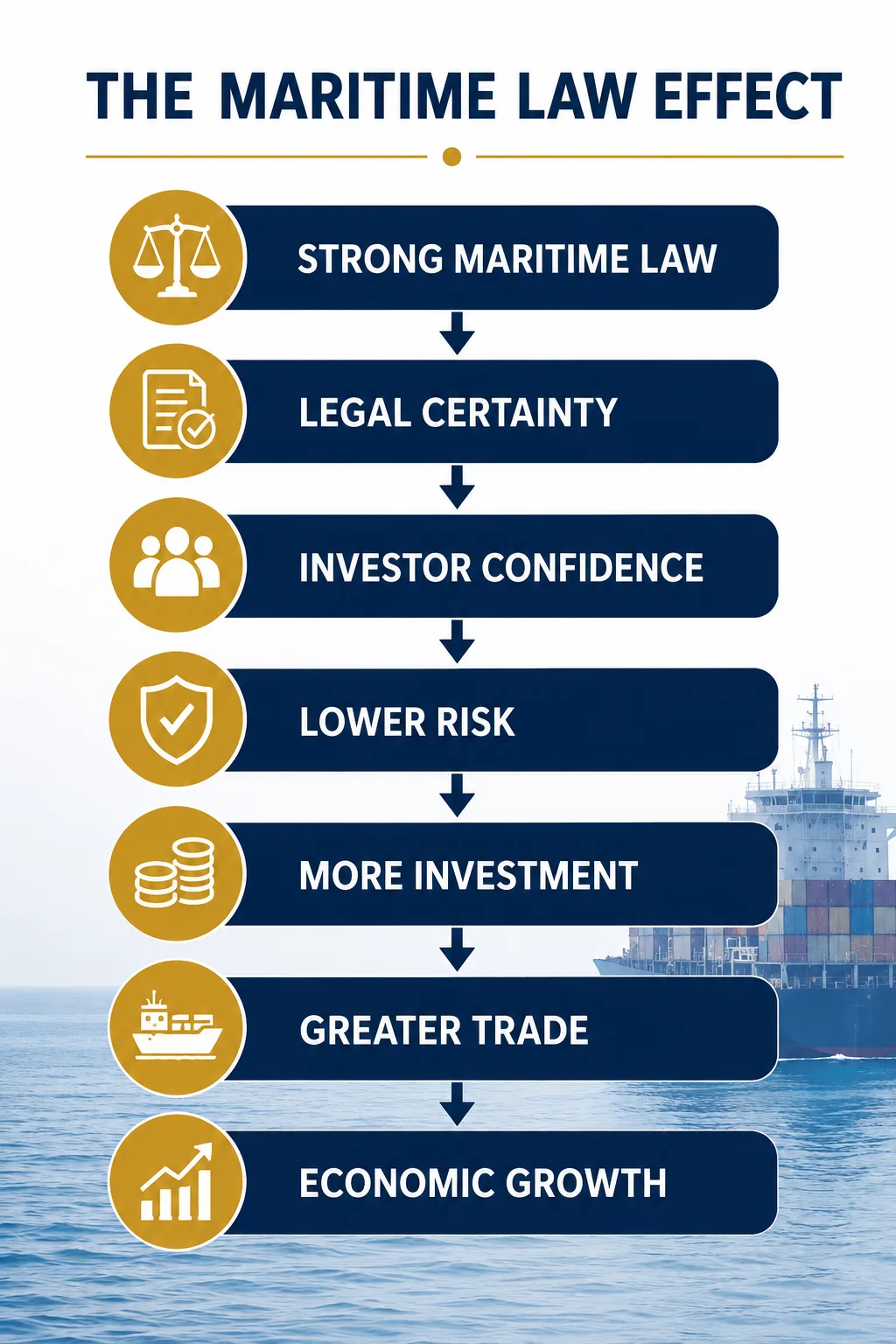
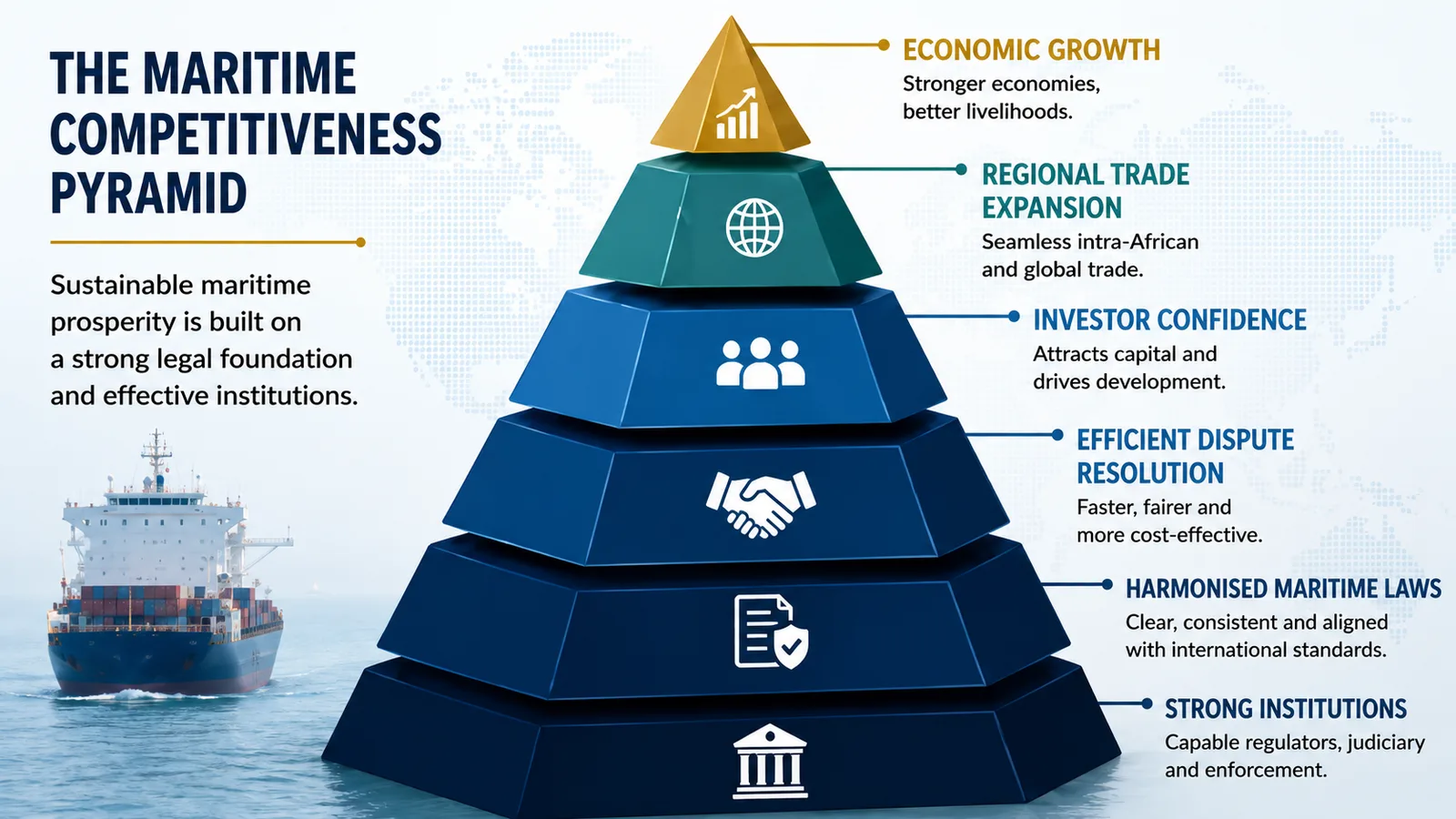
Strong legal institutions reduce investment risk.
Predictable regulations improve financing conditions.
Efficient dispute resolution lowers transaction costs.
Harmonised legal frameworks accelerate regional trade.
Collectively, these factors strengthen Africa's position within increasingly complex global supply chains.
As geopolitical tensions reshape global shipping routes, jurisdictions offering legal certainty will become increasingly attractive destinations for investment.
The PrimeAxis Insight
Africa's maritime future will not ultimately be secured by ports alone.
Ports move ships.
Law moves investment.
The continent's competitiveness will not be determined solely by the number of terminals it builds or the depth of its harbours.
It will be determined by the confidence its institutions inspire.
The next competitive advantage will be measured in faster dispute resolution, stronger judicial capacity, harmonised regulations and legal systems trusted by global commerce.
Infrastructure attracts attention.
Institutions attract investment.
As Africa pursues a more integrated and competitive maritime future, strengthening maritime law can no longer remain a supporting reform.
It must become a strategic economic priority.