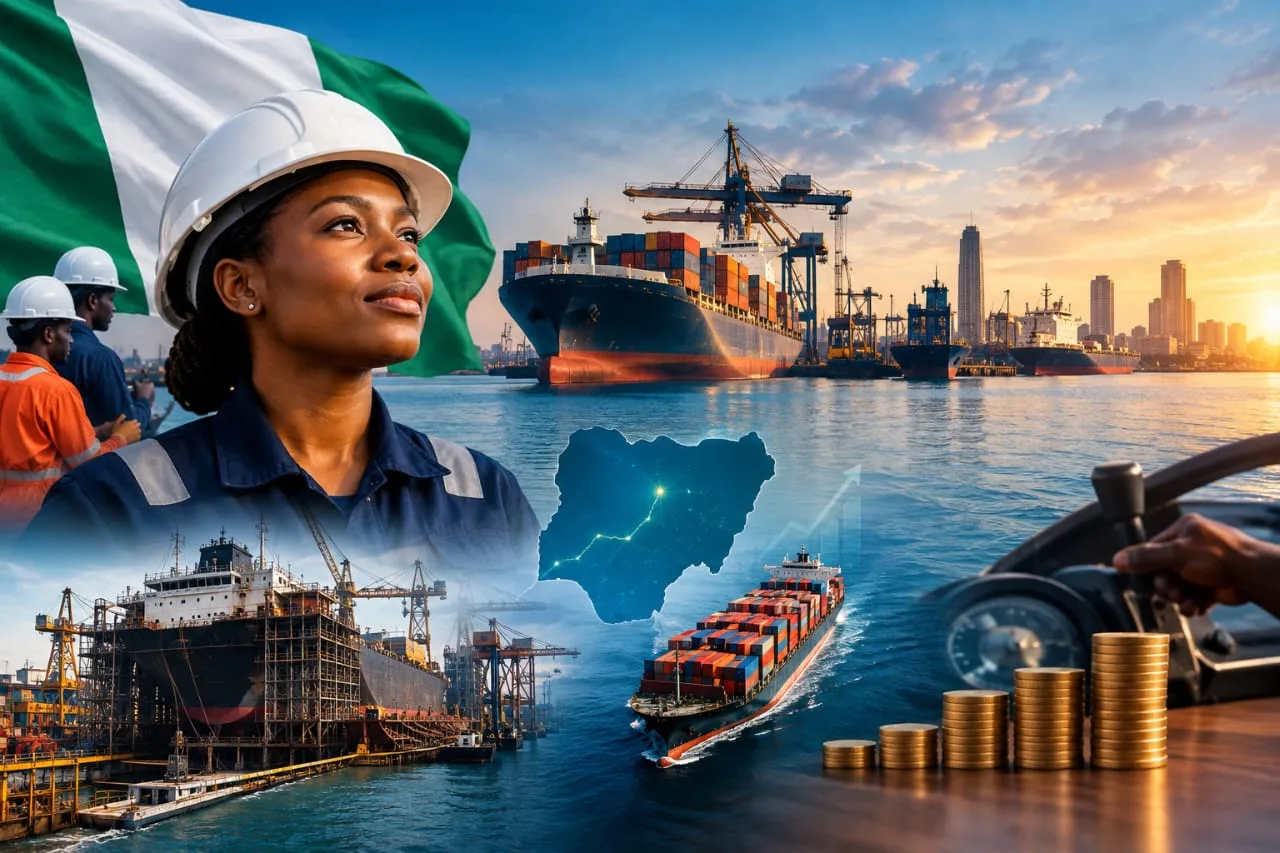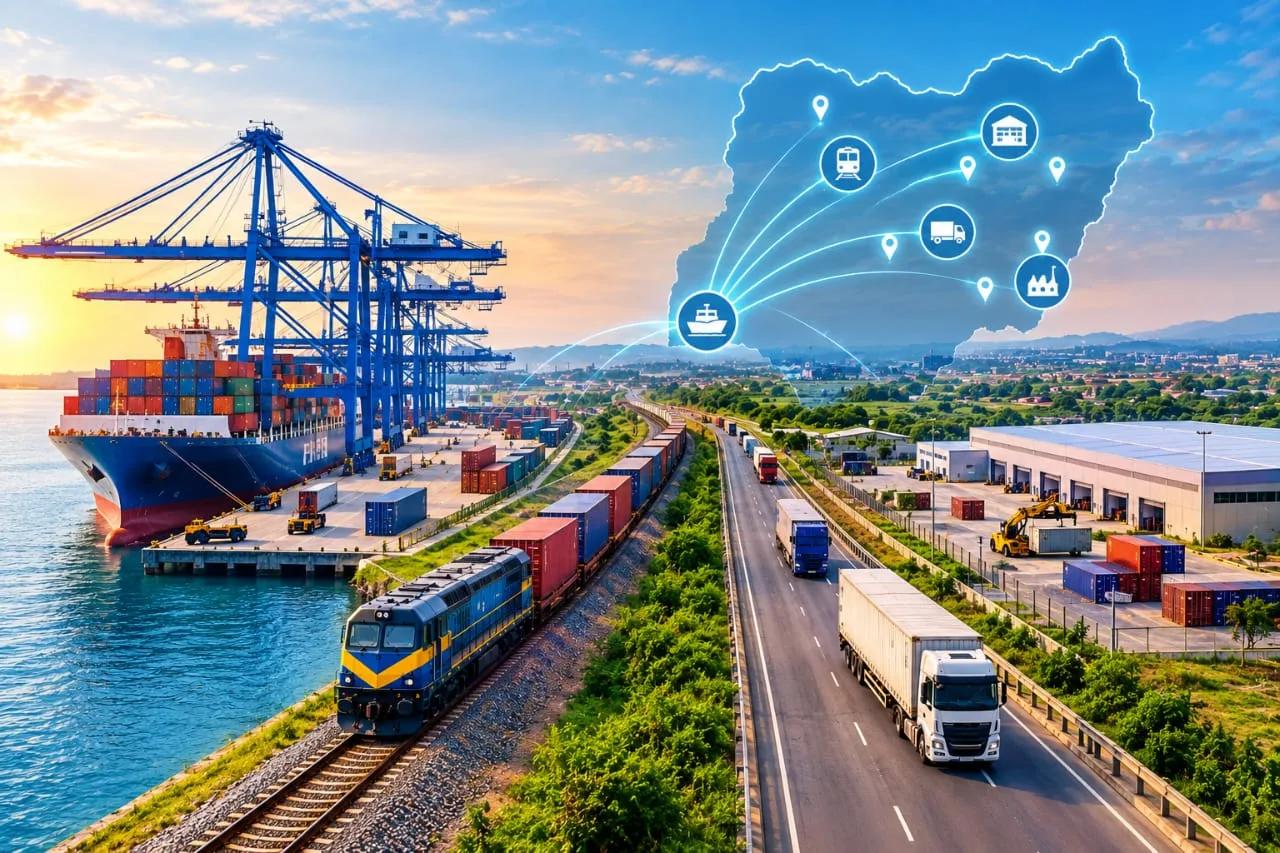
When governments discuss economic infrastructure, the conversation usually centres on roads, railways, ports, airports and power plants. These assets attract billions in public investment because they move goods, connect markets and drive economic growth.
Yet one of Africa's most productive economic systems is rarely included in that conversation.
Fisheries
Across the continent, fisheries are still largely viewed through the narrow lenses of agriculture, food production or rural livelihoods. While those functions are vital, they tell only part of the story. Fisheries are far more than a source of food.
They are productive economic infrastructure that supports industries, creates employment, drives trade, generates foreign exchange and sustains millions of livelihoods.
As Africa seeks to unlock the full potential of its Blue Economy, perhaps the more important question is not how much fish the continent produces, but whether it is prepared to recognise fisheries as the economic infrastructure they have always been.
Rethinking Infrastructure
Governments have traditionally measured infrastructure by what they can build—roads, bridges, ports and power plants. But in modern economies, infrastructure is better understood by what it enables.
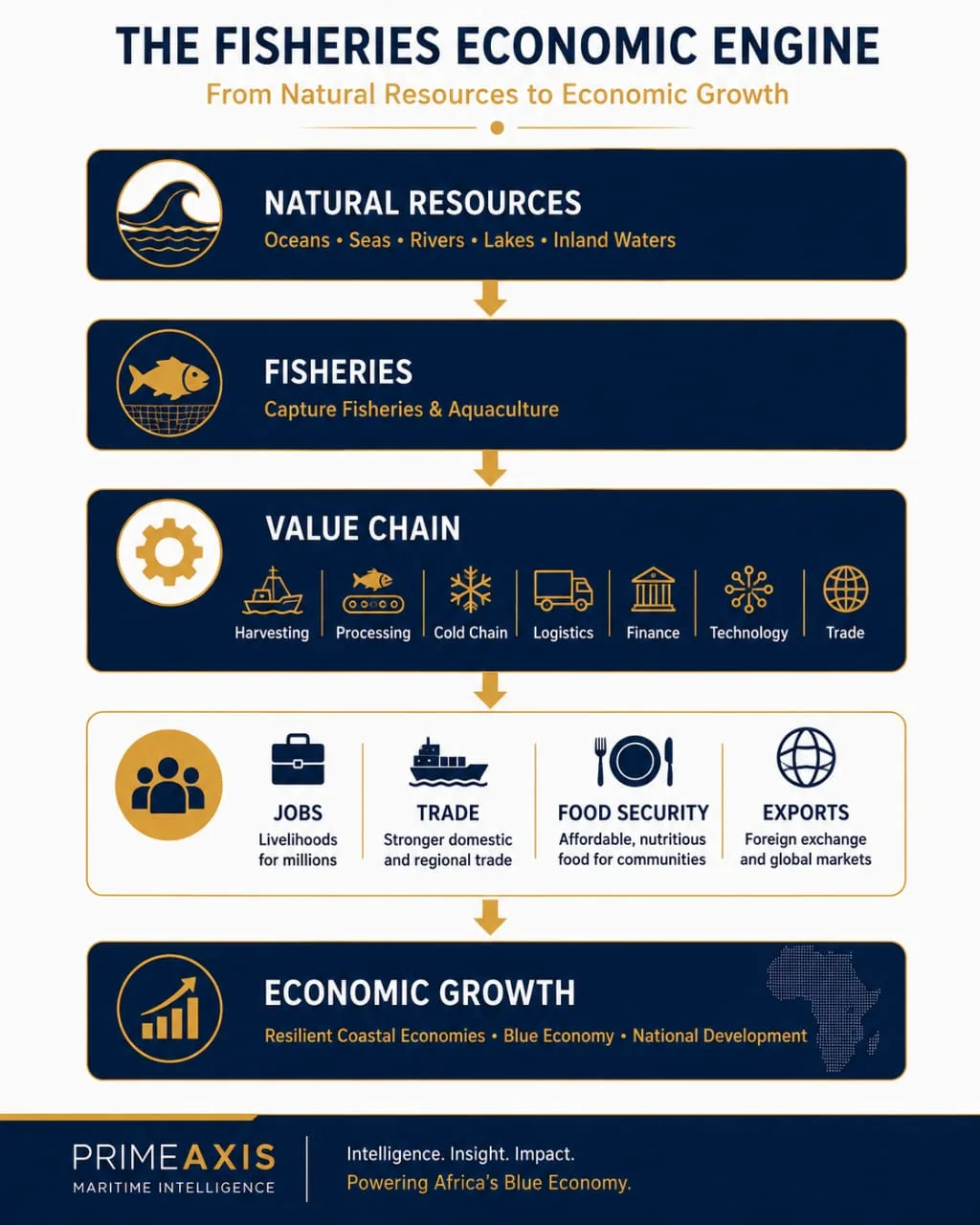
By that measure, fisheries deserve to stand alongside transport, logistics and energy as strategic productive infrastructure because they connect value chains, sustain industries and generate economic activity long after fish are landed.
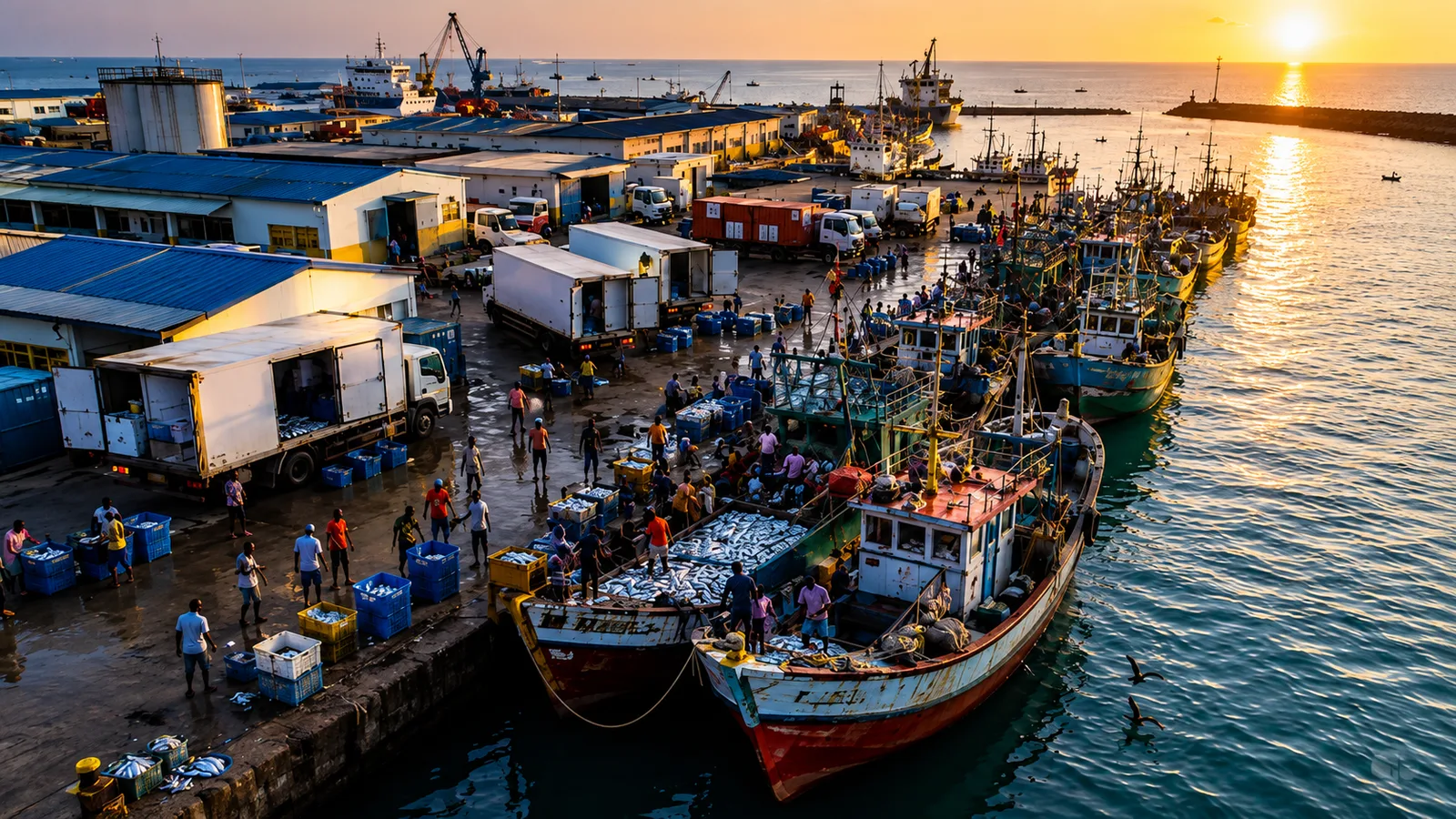
A productive fishery extends far beyond rivers, lakes and oceans. It encompasses fishing vessels, landing sites, cold-chain facilities, processors, transport operators, equipment manufacturers, feed mills, exporters, financial institutions, research organisations and digital platforms.
Every tonne of fish landed activates an economic chain that extends far beyond the harbour. Boat builders, fuel suppliers, ice producers, processors, transport operators, insurers, exporters, researchers and retailers all depend on productive fisheries. Few sectors demonstrate such a broad multiplier effect across the economy.
When fisheries thrive, businesses expand, jobs are created and coastal communities prosper. When they decline, the effects ripple across transport, manufacturing, commerce, food systems and household incomes.
Infrastructure is not defined by what it is built from.
It is defined by what it enables.
A Global Economic Engine
The evidence supports this broader perspective.
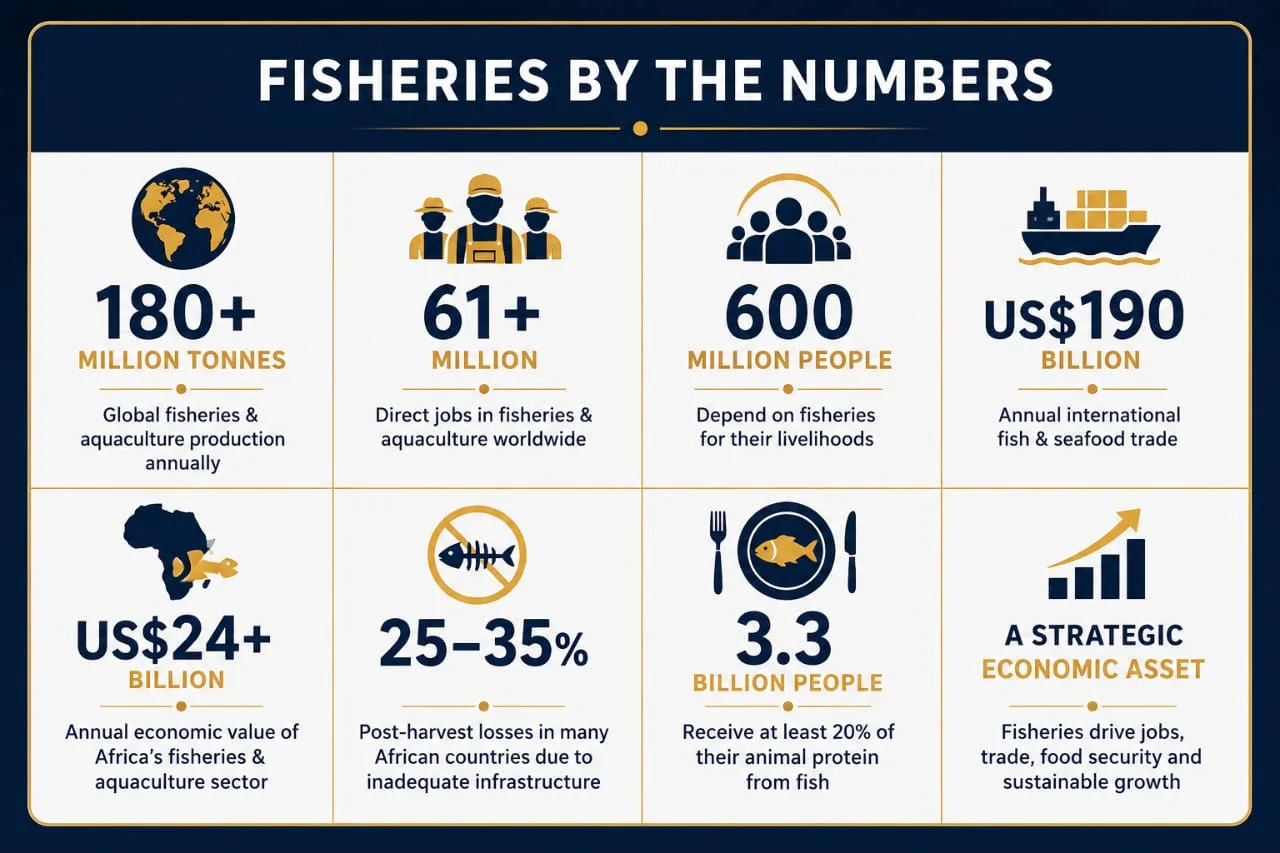
According to the Food and Agriculture Organization (FAO), global fisheries and aquaculture now produce more than 180 million tonnes of fish annually and contribute an estimated US$270 billion to the global economy each year.
More than 61 million people work directly in capture fisheries and aquaculture, while nearly 600 million people depend on the sector through fishing, processing, transportation, marketing and other value-chain activities.
Fish also remains one of the world's most traded food commodities, accounting for around US$190 billion in international trade annually. For many developing economies, seafood exports are a major source of foreign exchange, employment and economic resilience.
The experience of countries such as Norway, Iceland, Vietnam and Chile demonstrates that fisheries become engines of national prosperity when supported by sound governance, modern infrastructure, scientific management and value addition.
Their success was not built on abundant fish stocks alone.
It was built on institutions.
Beyond Food Security
Fish provides more than nutrition.
The FAO estimates that over 3.3 billion people obtain at least 20 per cent of their animal protein intake from fish. In many African coastal and island communities, that dependence is considerably higher.
Yet reducing fisheries to food security understates their true economic significance.
Every fish harvested creates value far beyond the landing site. It generates demand for cold storage, processing, transportation, packaging, finance, insurance, technology, research and retail. Every link in that chain supports businesses, creates employment and contributes to national output.
Like a port connecting producers to global markets, fisheries connect natural resources to economic opportunity.
That is why they should be viewed as infrastructure—not simply another agricultural commodity.
Africa's Untapped Opportunity
Africa possesses some of the world's richest marine and inland fisheries resources.
The continent's fisheries and aquaculture sector generates more than US$24 billion in annual economic value and supports more than 12 million livelihoods. In several coastal communities, fish provide as much as 60 per cent of animal protein consumed.
Yet Africa captures only a fraction of the value its fisheries can generate.
Illegal, Unreported and Unregulated (IUU) fishing continues to deprive coastal states of billions of dollars in economic activity each year. Weak landing infrastructure, inadequate cold-chain systems and limited processing capacity contribute to post-harvest losses estimated at 25–35 per cent in many African countries. Limited access to finance, outdated equipment and fragmented governance further constrain productivity and investment.
The result is a familiar paradox: a continent rich in fisheries resources but unable to fully convert those resources into sustainable economic prosperity.
Nigeria's Fisheries Paradox
Nigeria illustrates this challenge clearly.
Despite its extensive Atlantic coastline, vast inland waterways and one of Africa's largest consumer markets, the country continues to rely heavily on imported fish to bridge a persistent domestic supply gap.
The issue is not simply production. It is the absence of the infrastructure that transforms fisheries resources into economic value.
From modern landing facilities and cold-chain logistics to processing capacity, access to finance, research, digital traceability and effective governance, Nigeria lacks many of the systems required to unlock the full economic potential of its fisheries.
As the Federal Ministry of Marine and Blue Economy advances its reform agenda, fisheries should no longer be viewed merely as an agricultural activity. They should be recognised as a strategic economic asset capable of strengthening food security, creating jobs, reducing imports, expanding exports and stimulating industrial growth.
Investing in Productive Infrastructure
Recognising fisheries as economic infrastructure requires a shift in policy priorities.
Investment must extend beyond fishing boats and gear to include modern landing centres, cold-chain logistics, processing hubs, aquaculture clusters, fisheries research, stock assessments, digital monitoring systems, maritime surveillance and improved access to finance for artisanal and commercial fishers.
These investments do more than increase fish production.
They reduce waste, strengthen supply chains, improve export competitiveness, stimulate enterprise development and create employment across multiple sectors.
In short, they generate the same multiplier effects governments expect from investments in roads, ports and railways.
PrimeAxis Insight
Africa's Blue Economy will not be transformed by ports alone.
It will be shaped by how effectively the continent develops the industries that surround its marine resources.
Fisheries already function as economic infrastructure. They feed populations, support millions of livelihoods, enable trade, sustain coastal economies and create value across complex supply chains.
The policy gap is not their importance.
It is their recognition
The countries that lead the next phase of the Blue Economy will not necessarily be those with the richest waters. They will be those that invest in fisheries as strategic infrastructure—backed by science, modern institutions, technology and value addition.
Ports move cargo.
Power grids energise industries.
Digital networks connect economies.
Fisheries sustain all three by creating the productive value chains that transform natural resources into lasting economic prosperity.
Fisheries deserve to be planned, financed and governed with the same strategic intent.
The question is no longer whether fisheries matter.
The real question is whether Africa is ready to invest in them as the infrastructure of its economic future.