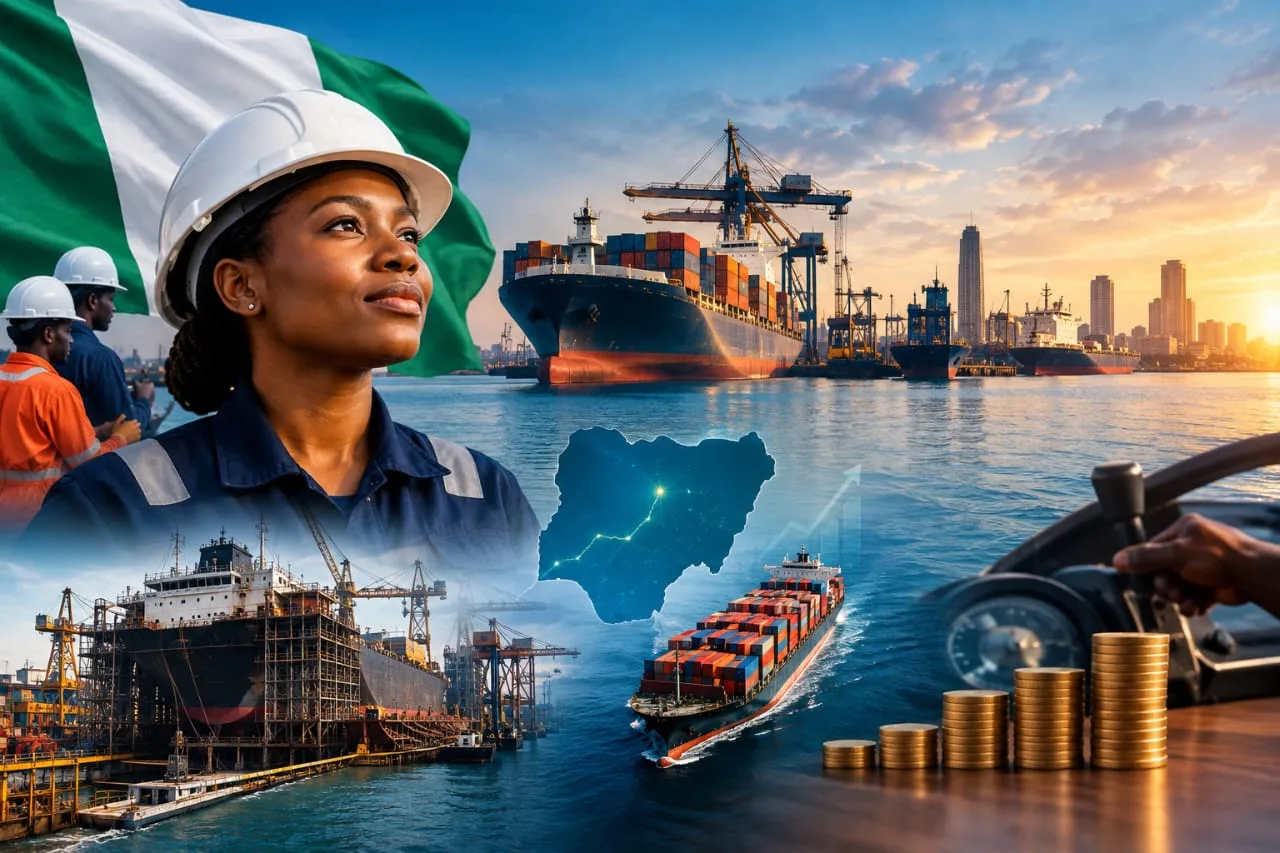
Nigeria has spent decades thinking about exports in terms of
what comes from its land.
Oil. Gas. Minerals. Agricultural commodities.
But as Nigeria enters a new phase of offshore investment,
another possibility is emerging.
What if Nigeria’s next valuable export is not a commodity,
but capability?
Offshore engineering. Subsea services. Marine logistics.
Fabrication. Ship repair. Vessel operations. Inspection. Surveying. Technical
services. The infrastructure, expertise and technology required to support
increasingly complex offshore activity.
Nigeria may have an opportunity to build an industry that
does more than service its own offshore economy.
It could eventually serve Africa.
The opportunity is becoming difficult to ignore.
In August 2026, the Federal Government introduced a new deep
offshore investment framework designed to unlock up to $50 billion in new
investment, beginning with the approximately $10 billion Bonga South West
project and other major offshore developments. The framework places emphasis on
domestic engineering, fabrication, marine logistics, technical services and
project management.
The Nigerian Upstream Petroleum Regulatory Commission,
NUPRC, has separately identified 22 major offshore projects expected between
2026 and 2030, with estimated investment potential of between $30 billion and
$50 billion.
For Nigeria’s oil and gas sector, those numbers represent
investment.
For the maritime economy, they represent something equally
important:
Demand.
THE ECONOMY CREATED AROUND AN OFFSHORE PROJECT
A major offshore project does not operate in isolation.
Platforms have to be engineered, installed and maintained.
Vessels transport people, equipment and materials. Subsea infrastructure
requires specialist engineering. Offshore structures require fabrication.
Equipment needs inspection and maintenance. Cargo moves through ports and
logistics bases. Assets must be surveyed, certified and eventually
decommissioned.
Behind hydrocarbon production sits an entire industrial
ecosystem.
That ecosystem may be where Nigeria’s larger opportunity
lies.
The Federal Government’s offshore investment framework
recognises the importance of maximising project execution within Nigeria where
commercially and technically feasible, particularly across engineering,
fabrication, marine logistics, technical services and project management.
NUPRC has also made the maritime dimension increasingly
explicit.
At the Lagos International Maritime Week on September 8,
NUPRC Chief Executive Oritsemeyiwa Eyesan called for offshore investment to
generate broader maritime jobs, industrial capacity and economic value.
The Commission identified ports, ship-repair facilities,
fabrication yards, logistics bases, storage systems and coastal transport
infrastructure as areas requiring greater investment. It also highlighted
opportunities for stronger Nigerian participation in vessel ownership and
operations, marine logistics, subsea engineering, fabrication, equipment
maintenance, inspection, certification, environmental services and marine
surveying.
That changes the question.
It is no longer simply:
How much oil can Nigeria produce?
It is:
How much industrial capability can Nigeria build because of
the investment required to produce it?
FROM LOCAL CONTENT TO LOCAL CAPABILITY
Nigeria has spent years discussing local content.
But there is a critical distinction between participating in
an industry and possessing the capability to compete within it.
A company can secure a contract without developing deep
technical capability.
A project can be executed in Nigeria while specialised
engineering is performed elsewhere.
A vessel can operate in Nigerian waters without being
Nigerian-owned.
A fabrication contract can be awarded locally while
higher-value design, technology and specialist services remain outside the
country.
This is why Nigeria’s next stage of maritime and offshore
development should move beyond the question of local participation.
The objective should be local capability.
Local capability means Nigerian companies possessing the
expertise, capital, infrastructure, technology and workforce to compete for
complex maritime and offshore work.
That distinction matters because capability can travel.
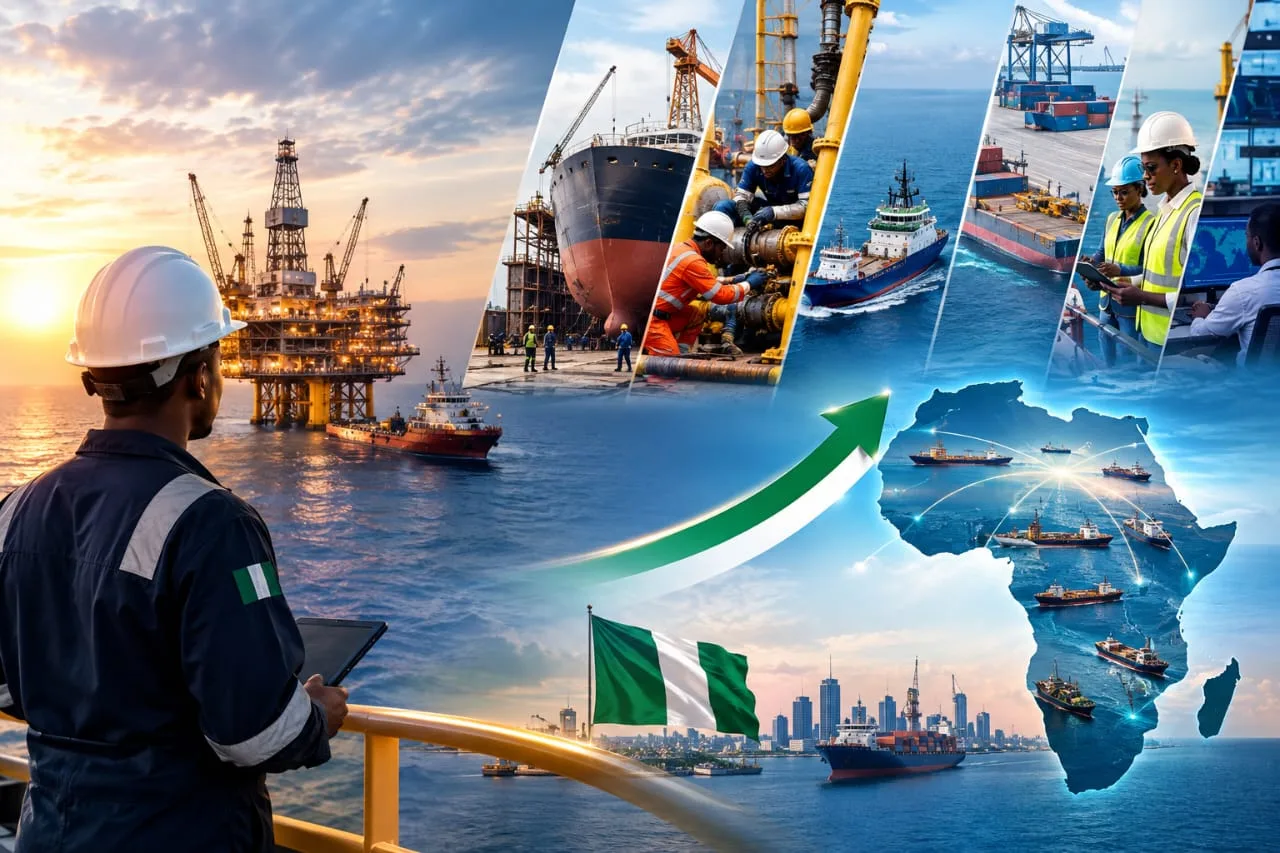
A Nigerian subsea engineering company that develops
expertise through domestic offshore projects can eventually pursue work in
Ghana, Angola, Senegal, Côte d’Ivoire or elsewhere in Africa.
A Nigerian marine logistics company can serve regional
offshore operations.
A Nigerian ship-repair facility can compete for vessels
operating across the Gulf of Guinea.
A Nigerian marine surveyor can sell expertise beyond
Nigerian waters.
A Nigerian-owned vessel can generate revenue beyond
Nigeria’s coastline.
That is when local content begins to become an export
industry.
NIGERIA HAS A DOMESTIC MARKET TO BUILD FROM
Nigeria’s own maritime market provides the foundation.
Nigerian ports handled 35.7 million metric tonnes of cargo
in the second quarter of 2026, representing a 12.3% increase from the same
period in 2025. Ocean-going vessel calls also increased by 14.4% year-on-year.
The country is expanding port infrastructure and seeking a
stronger position as a maritime and logistics hub for West and Central Africa.
But infrastructure alone does not create a maritime
industry.
Infrastructure creates capacity. Companies create
capability.
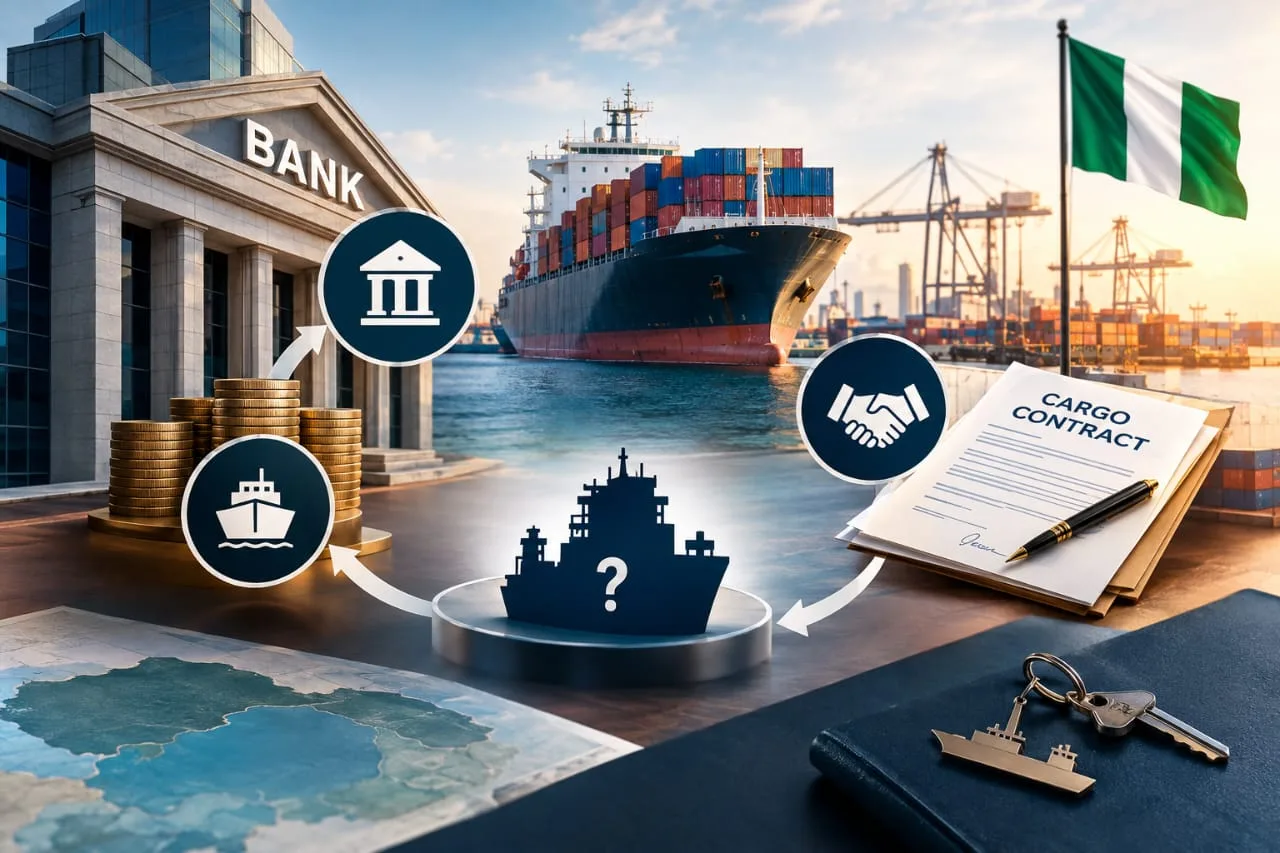
A port can receive a vessel without producing the company
that owns it.
An offshore project can generate demand without creating the
engineering company that captures the expertise.
A logistics corridor can move cargo without creating the
technology companies that optimise it.
The opportunity is therefore not simply to build more
infrastructure.
It is to use Nigeria’s offshore projects, ports and domestic
demand as a platform for building competitive maritime businesses.
Build for Nigeria. Scale for Africa.
That should be the industrial logic.
THE EXPORT MAY NOT LOOK LIKE AN EXPORT
This is what makes maritime capability different from a
traditional commodity export.
The export may not leave Nigeria in a container.
It could be a Nigerian engineering company contracted for an
offshore project in another African country.
It could be a specialised vessel owned and operated by a
Nigerian company.
It could be marine surveying expertise sold to an
international project.
It could be subsea engineering, fabrication, inspection or
maintenance.
It could be a ship-repair facility attracting vessels
serving the wider Gulf of Guinea.
It could be a Nigerian workforce whose technical expertise
is competitive internationally.
In each case, Nigeria is exporting capability rather than
raw material.
And capability can compound.
Oil production generates value from the resource.
Industrial capability creates companies, skills, technology,
intellectual property, infrastructure and recurring services that can generate
value repeatedly.
The first extracts value. The second can reproduce it.
THE INDUSTRIAL OPPORTUNITY IS LARGER THAN OIL
This is why Nigeria’s offshore investment cycle should not
be viewed solely through the lens of hydrocarbon production.
Oil and gas can become a demand engine for maritime
industrialisation.
If Nigeria receives billions of dollars in offshore
investment but continues importing much of the vessels, specialised equipment,
engineering expertise and marine services required to execute those projects,
production may increase without a comparable expansion of the industrial base.
But if that investment creates competitive Nigerian
suppliers, shipyards, logistics operators, fabrication companies, vessel
owners, engineering firms and specialised service providers, the economic
impact becomes deeper.
The distinction is important.
Local participation can mean being present in a contract.
Local capability means possessing the capacity to compete.
The latter creates something that can eventually be sold
beyond the domestic market.
THE AFRICAN MARKET IS THE NEXT TEST
Nigeria should not think of this opportunity only in terms
of servicing Nigerian projects.
Across Africa, offshore oil and gas, ports, shipping,
logistics and maritime infrastructure are generating demand for similar
capabilities.
Ghana, Angola, Senegal, Côte d’Ivoire, Equatorial Guinea, Namibia, Mozambique and other African markets will require combinations of
marine logistics, engineering, vessel services, fabrication, inspection,
surveying and technical expertise.
Nigeria has an important advantage: a large domestic market
from which companies can develop and scale.
The strategic logic is therefore straightforward:
Build for Nigeria. Scale for Africa.
A Nigerian company that develops world-class offshore
capability at home can eventually compete for regional work.
A Nigerian-owned vessel can serve more than Nigerian waters.
A Nigerian shipyard can attract vessels operating across the
Gulf of Guinea.
A Nigerian engineering company can sell technical expertise
across borders.
A Nigerian workforce can export knowledge without leaving
the value of that expertise entirely outside the country.
That is how maritime capability can become an export
industry.
THE REAL TEST IS WHAT REMAINS
This is where the $30 billion to $50 billion offshore
investment opportunity becomes more than an oil story.
Capital entering Nigeria does not automatically mean
industrialisation.
The real test will be what remains after the projects are
completed.
How many Nigerian companies become competitive suppliers?
How many specialised vessels become Nigerian-owned and
operated?
How much engineering and fabrication capability is genuinely
retained in Nigeria?
How many ship-repair facilities become commercially
sustainable?
How much subsea and offshore expertise do Nigerian companies
acquire?
How many Nigerian professionals develop skills that can
compete internationally?
And ultimately:
How much of the capability created for Nigeria’s offshore
revival can be sold to the rest of Africa?
These are the metrics that should increasingly sit alongside
production targets.
Because the success of Nigeria’s offshore revival should not
be measured only by how much oil and gas comes out of the seabed.
It should also be measured by what Nigeria learns to build,
own, operate and export because of it.
PRIMEAXIS INSIGHT
Nigeria may be entering an unusually important phase in the
development of its offshore economy.
The strategic opportunity is bigger than attracting capital
and increasing hydrocarbon production.
It is to turn that investment into demand for Nigerian
maritime capability.
That means connecting offshore oil and gas development with
marine engineering, subsea services, fabrication, ship repair, vessel
ownership, marine logistics, technical services, ports and specialised skills.
The progression is straightforward:
Investment creates demand.
Demand creates capability.
Capability creates industry.
Industry creates exports.
If Nigeria gets that sequence right, it could do more than
produce from its offshore resources.
It could build an ecosystem of maritime companies capable of
serving an African market far larger than its own.
Nigeria’s next big export may not come from land.
It may come from the maritime capability Nigeria builds
because of what lies beneath its waters.