Why Africa Cannot Build a Blue Economy Without a Maritime Finance Strategy
Across Africa, the Blue Economy has emerged as one of the
continent's defining economic ambitions. Governments have established dedicated
ministries, the African Union has adopted continental strategies, and
development partners continue to champion the immense potential of Africa's
oceans, rivers, lakes and coastal ecosystems. Investors are increasingly
recognising the strategic value of Africa's maritime domain.
Yet one critical question continues to receive far less attention than it deserves.
Who will finance Africa's Blue Economy?
Not who will draft the next strategy.
Not who will convene the next summit.
But who will provide the long-term capital required to build
ships, modernise ports, develop inland waterways, finance marine technology,
expand aquaculture, establish shipyards and create globally competitive
maritime industries?
The question is more urgent than ever.
Africa possesses more than 13 million square kilometres of maritime space, over 47,000 kilometres of coastline, extensive inland waterways, abundant fisheries, strategic shipping routes and some of the world's fastest-growing coastal economies. According to the African Union, the continent's Blue Economy already generates more than US$298 billion annually and is projected to exceed US$405 billion by 2030, supporting tens of millions of jobs.
The opportunity is undeniable.
But opportunity alone does not build maritime economies.
Capital does.
Beyond Resources: The Real Constraint
Africa does not suffer from a shortage of maritime assets.
It suffers from a shortage of maritime finance architecture.
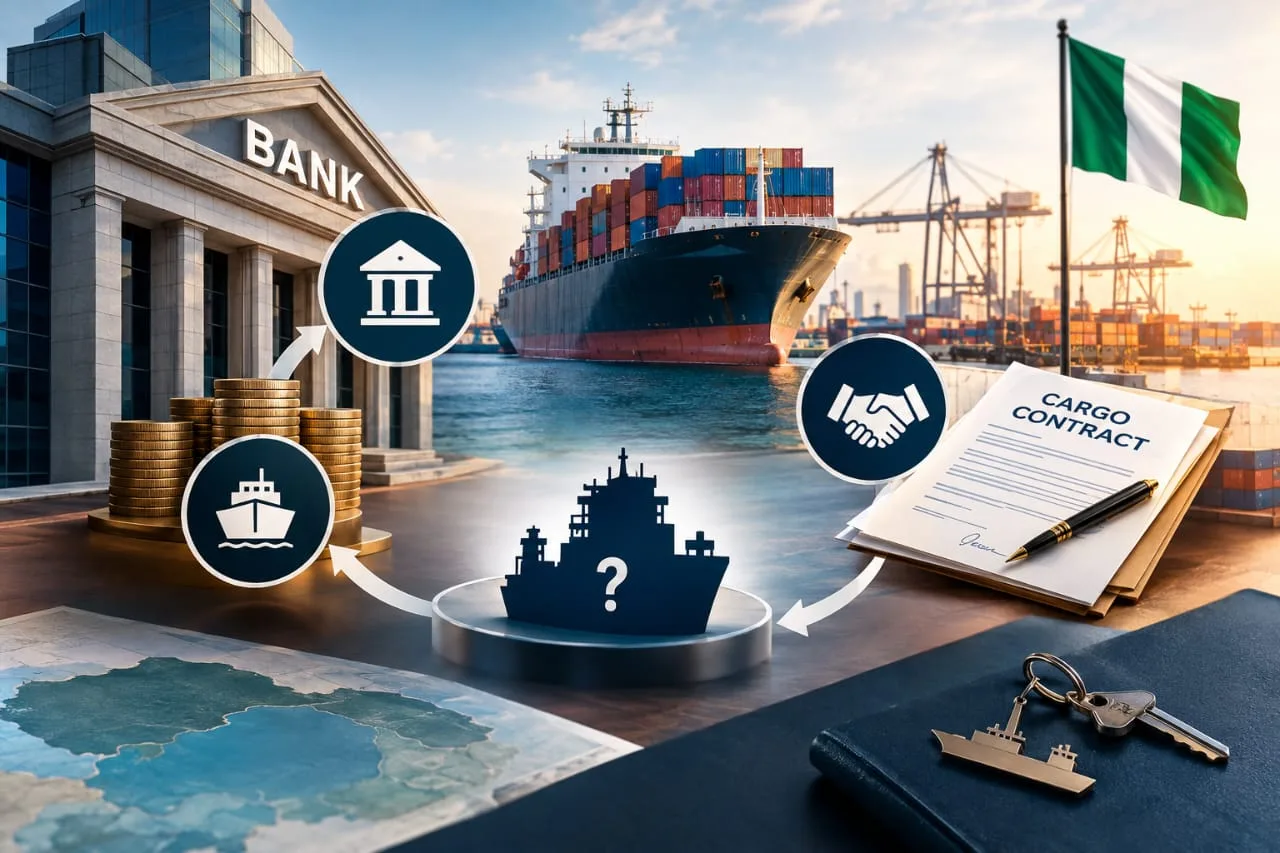
The world's leading maritime economies have built far more than ports and shipping lanes. They have developed institutions that finance maritime growth. Maritime banks, export credit agencies, ship leasing companies, marine insurers, capital markets, investment funds and specialised financial institutions work together to transform maritime opportunities into investable assets.
Africa, by contrast, has invested considerable attention in
physical infrastructure while paying far less attention to the financial
architecture that makes maritime investment possible.
The distinction is critical.
Capital does not flow because a sector has potential. It
flows where risk is measurable, contracts are enforceable, returns are
predictable and investment exits are credible.
Without these conditions, even the most promising Blue
Economy initiatives remain aspirations rather than investments.
The Bankability Gap
One of the clearest messages emerging from investors is not
that Africa lacks opportunities.
It is that Africa lacks a pipeline of bankable maritime projects.
Across the continent, governments continue to announce port
expansions, coastal tourism initiatives, fisheries programmes, inland waterway
projects and marine industrial zones. Yet relatively few are supported by the
feasibility studies, commercial structures, governance frameworks and revenue
models required to attract institutional capital.
Until that gap is closed, private capital will remain cautious despite growing global demand for sustainable infrastructure and ocean-based industries.
The challenge, therefore, is not simply raising finance.
It is creating investments that finance can trust.
Development Finance Cannot Carry the Future
Development Finance Institutions, including the African Development Bank, the World Bank and regional development partners, have played an indispensable role in advancing Africa's Blue Economy through concessional finance, guarantees, technical assistance and blended finance.
Their contribution remains essential.
But development finance was never intended to become the continent's permanent financing model.
Transforming Africa into a globally competitive maritime
economy will require investment running into hundreds of billions of dollars
over the coming decades. Neither public budgets nor donor funding can finance
that ambition alone.
The next phase of Africa's Blue Economy must therefore be driven increasingly by commercial capital.
That transition will occur only when governments move beyond
promoting projects to building investment ecosystems capable of attracting
long-term private investment.
Africa's Largest Investors Are Already Here
Ironically, Africa's greatest source of long-term capital
may not lie overseas.
It already exists within the continent.
African pension funds, insurance companies, sovereign wealth funds and other institutional investors collectively manage billions of dollars in assets, yet only a fraction is channelled into maritime infrastructure or Blue Economy investments.
Most remains concentrated in government securities and other
low-risk instruments.
The challenge is not the absence of capital.
It is the absence of investable opportunities supported by policy certainty, sound governance and appropriate risk allocation.
Unlocking domestic institutional capital could become one of
the most transformative developments in Africa's maritime future.
Africa cannot build a globally competitive Blue Economy
while its own long-term savings remain largely disconnected from maritime
development.
Financing Ownership, Not Just Infrastructure
Much of Africa's Blue Economy conversation continues to
focus on infrastructure.
Infrastructure matters.
But infrastructure alone does not create prosperity.
A modern port financed by foreign capital, served by foreign
shipping lines, insured by foreign companies, financed by foreign banks and
supported by foreign logistics providers leaves much of the value chain outside
Africa.
The real objective should not simply be financing infrastructure.
It should be financing African ownership.
Ownership of vessels.
Ownership of shipyards.
Ownership of logistics companies.
Ownership of marine technology.
Ownership of fisheries value chains.
Ownership determines who captures value, creates skilled employment, develops industrial capability and accumulates long-term wealth.
Without ownership, Africa risks becoming the location where
maritime business takes place rather than the continent where maritime value is
retained.
Nigeria's Strategic Opportunity
Nigeria illustrates both the promise and the challenge of
Africa's Blue Economy.
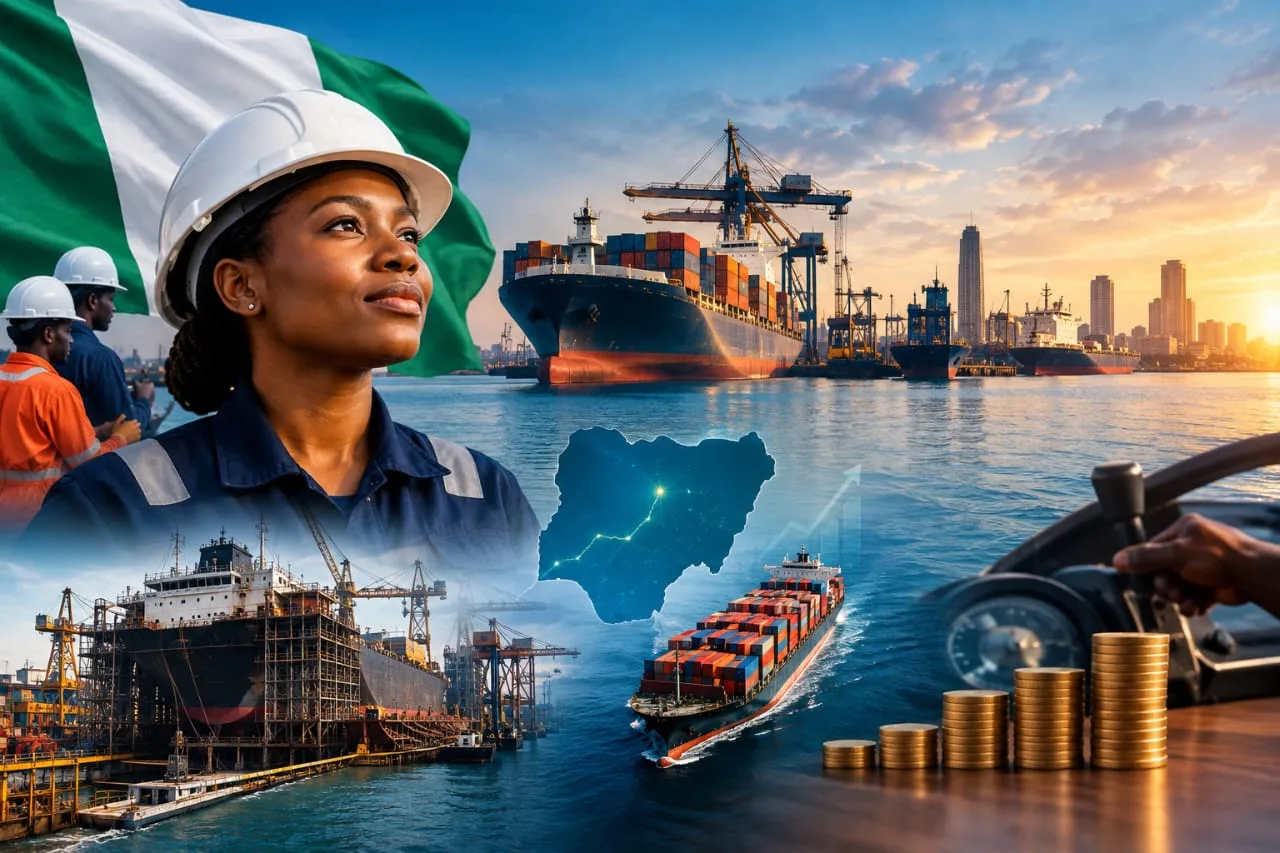
With an 853-kilometre coastline, an extensive Exclusive Economic Zone, one of Africa's largest consumer markets and a dedicated Federal Ministry of Marine and Blue Economy, the country possesses many of the foundations required for maritime leadership.
Recent growth in sectoral revenue demonstrates increasing
economic momentum, while continued investment by international port operators
reflects growing investor confidence.
Yet infrastructure expansion alone will not secure maritime
leadership.
Nigeria must build a maritime finance ecosystem capable of supporting indigenous shipowners, inland waterway transport, fisheries, marine manufacturing, coastal tourism and maritime innovation.
Policy certainty, institutional coordination, efficient
project preparation and access to long-term capital will ultimately determine
whether Nigeria becomes a maritime economy—or merely a maritime market.
Building Africa's Maritime Finance Architecture
The next phase of Africa's Blue Economy should focus less on identifying opportunities and more on building the institutions capable of financing them.
That means strengthening domestic capital markets.
Developing specialised maritime finance institutions.
Expanding blended finance mechanisms.
Mobilising pension and insurance capital.
Creating blue bonds and other innovative financing instruments.
Reducing regulatory uncertainty.
Preparing investment-ready project pipelines.
And deepening collaboration between governments, development finance institutions and private investors.
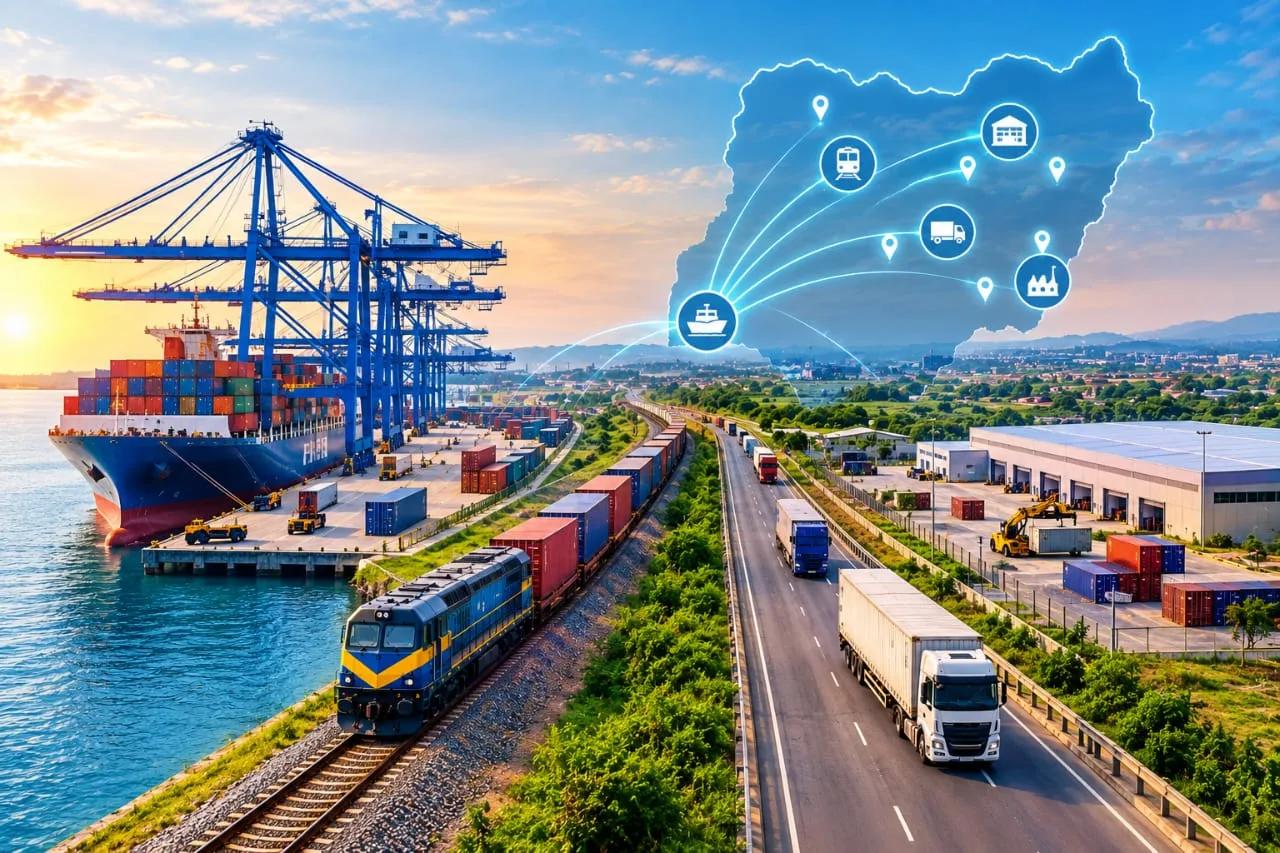
Physical infrastructure enables maritime trade.
Maritime finance architecture enables maritime transformation.
PRIMEAXIS INSIGHT
Africa's Blue Economy is often described as a resource opportunity.
In reality, it is becoming a test of financial capability.
The countries that lead the next era of maritime development
will not necessarily be those with the deepest ports or the longest coastlines.
They will be those that build the strongest maritime finance ecosystems—where
policy, capital, insurance, innovation and private enterprise work together to
finance ownership, industrialisation and long-term competitiveness.
The next maritime race will not be won by geography alone.
It will be won by countries that understand a simple but powerful truth: maritime competitiveness is built as much in financial institutions as it is in ports and shipyards.
Because in the global maritime economy, nations do not
become maritime powers by owning the most water. They become maritime powers by
mobilising the capital to transform that water into enduring economic value.