The Capstone Vision
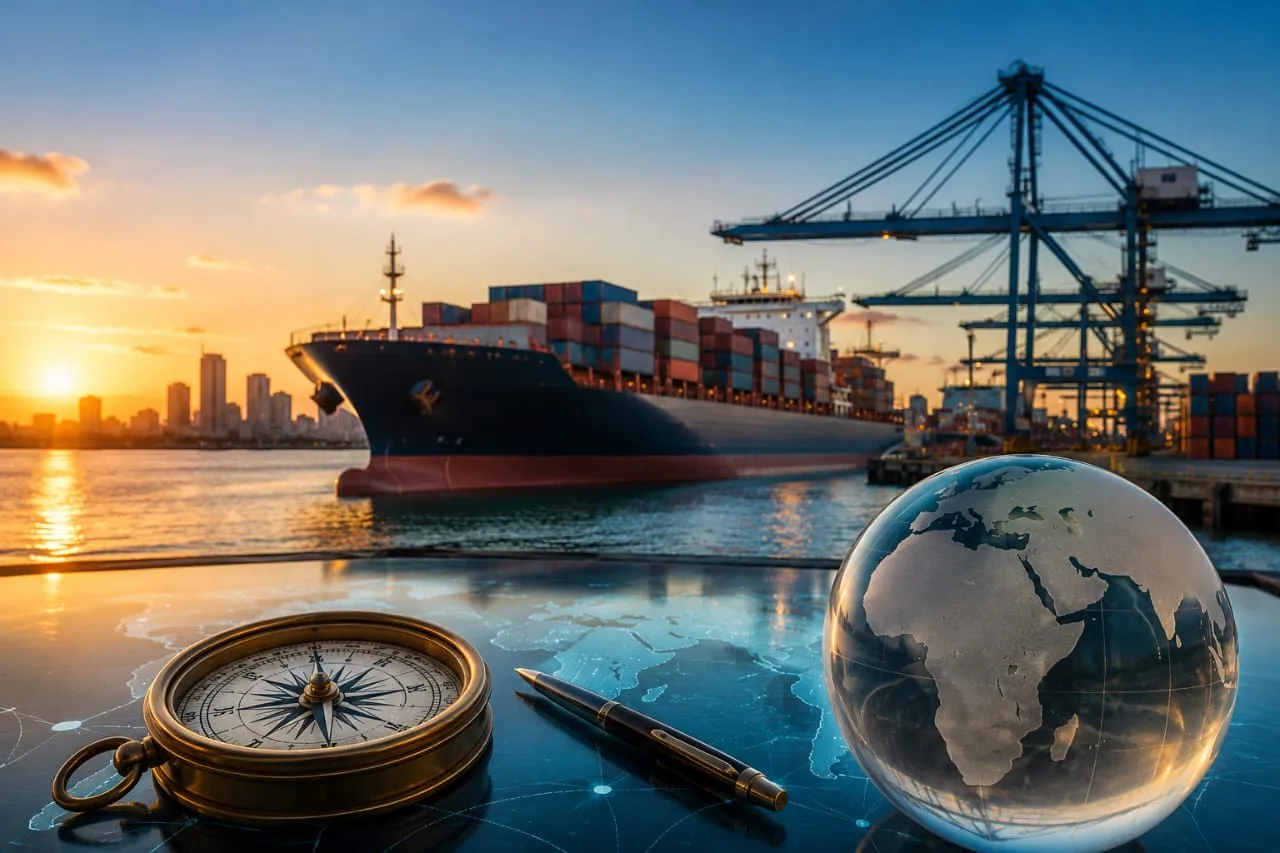
By 2040, maritime powerhouse Africa would no longer be defined by trade volume alone, but by ownership, control, and integration across the entire maritime value chain.
It would be a continent that moves from being a cargo-dependent participant in global shipping to a strategic maritime actor shaping global trade flows, industrial value, and ocean governance.
This transformation rests on four strategic pillars and requires a decisive shift away from two long-standing structural dependencies.
STRATEGIC PILLARS FOR 2040
1. Indigenous Fleet & Shipbuilding Capacity
A maritime powerhouse Africa will significantly reduce dependence on foreign-owned vessels.
This requires scaling:
Domestic shipbuilding yards
Coastal and deep-sea fleet ownership
Maritime logistics enterprises
Marine supply and maintenance ecosystems
The goal is to retain freight value within the continent and reduce capital flight driven by external shipping dominance.
2. Modernised and High-Efficiency Ports
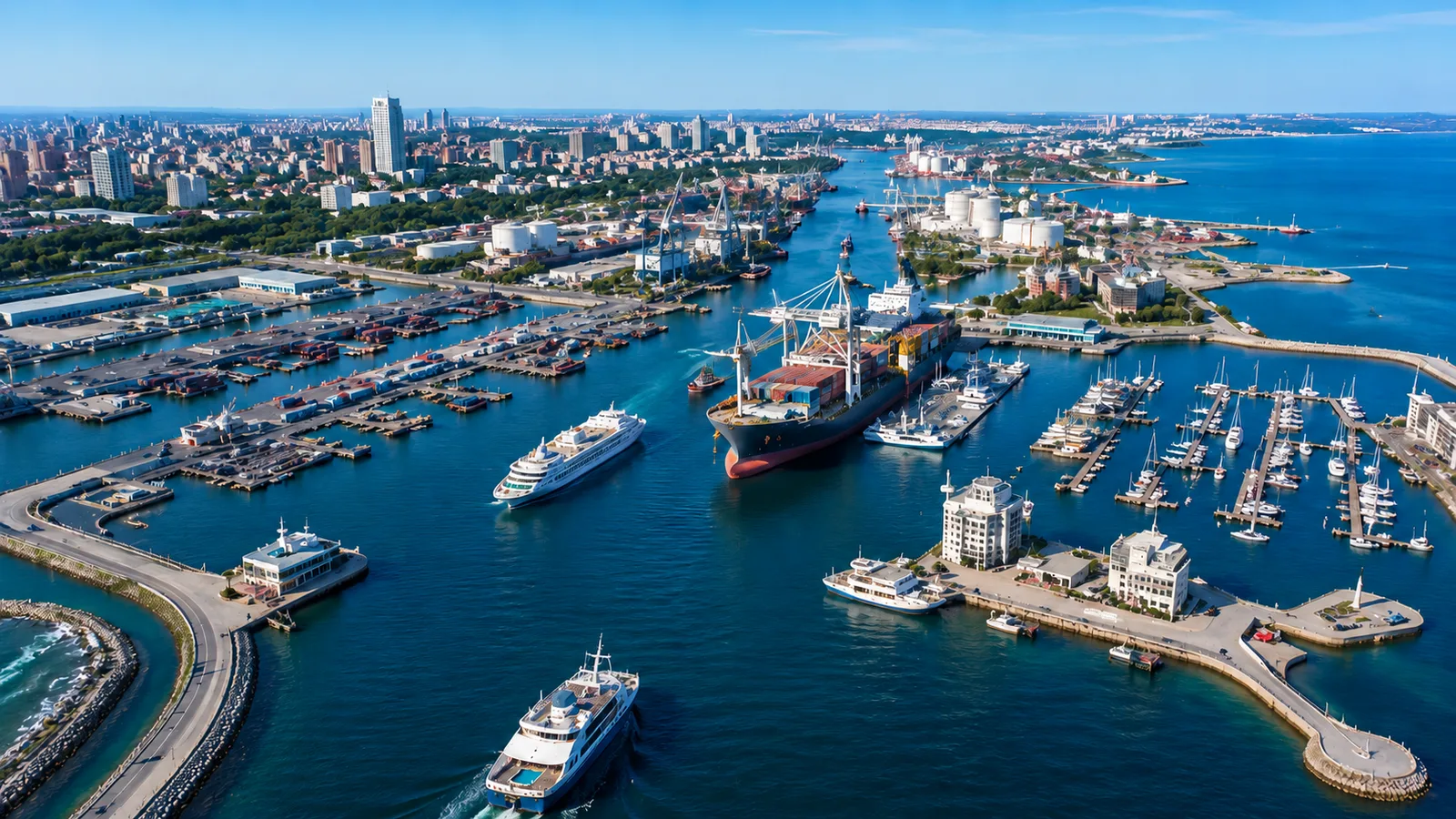
Africa’s major gateways will evolve into digitally integrated logistics hubs, not just cargo entry points.
By 2040, port systems will be defined by:
Fully automated Port Community Systems
Smart cargo clearance and tracking
Deep-sea port expansion and connectivity
Seamless inland logistics corridors
With rising container traffic already evident across key gateways, the strategic objective is to drastically reduce vessel turnaround times and eliminate costly port inefficiencies.
3. Green Shipping and Energy-Enabled Maritime Growth
Africa’s maritime future will align with global decarbonisation goals while leveraging its renewable energy advantage.
By 2040, the continent will:
Power ports with renewable energy systems
Support low-emission shipping corridors
Develop green bunkering capacity
Actively participate in IMO-aligned climate transition frameworks
This positions Africa not as a follower, but as a contributor to the future of sustainable global shipping.
4. Integrated Maritime Space under CEMZA
A defining feature of the 2040 vision is the operationalisation of the Combined Exclusive Maritime Zone of Africa (CEMZA).
This framework enables:
Coordinated maritime surveillance and security
Harmonised fisheries and resource governance
Reduced maritime crime and piracy risks
Expanded intra-African maritime trade under AfCFTA
CEMZA represents the shift from fragmented national waters to a coordinated continental maritime system.
TWO STRUCTURAL DEPENDENCIES TO OVERCOME
To achieve this transformation, Africa must actively dismantle two long-standing constraints:
5. Foreign Logistics Dominance
Africa currently depends heavily on foreign-owned shipping lines for the movement of its exports and imports.
By 2040, this must shift toward:
Strong indigenous shipping companies
Strategic coastal and tanker fleets
Regional maritime operators serving industrial and trade corridors
Without this shift, Africa will continue exporting value while importing logistics control.
6. Analog and Fragmented Port Systems
Many African ports still operate with legacy systems that slow cargo movement and increase trade costs.
The 2040 transition requires:
Fully digitised port ecosystems
Automated customs and clearance systems
Integrated national and regional port networks
Deep-sea port infrastructure replacing congested legacy terminals
This shift is essential to unlock efficiency, competitiveness, and trade scalability.
FINAL OUTLOOK
A maritime powerhouse Africa by 2040 is not defined by aspiration—it is defined by system redesign.
It is an Africa that:
- Owns its fleets
- Runs efficient smart ports
- Leads the green maritime transition
- Operates a coordinated maritime security and trade zone
Most importantly, it is an Africa that no longer participates in maritime trade as a dependent system—but as a co-architect of global maritime flows.