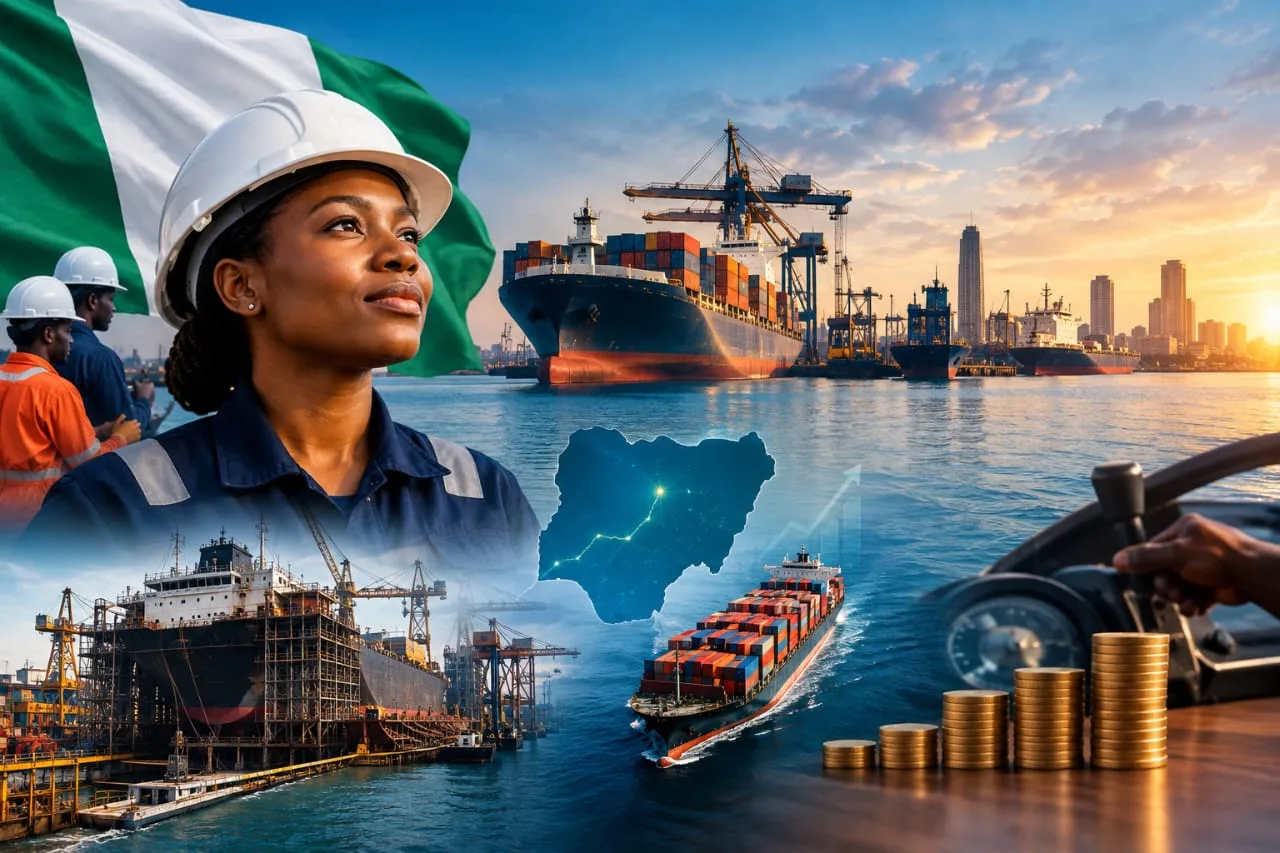
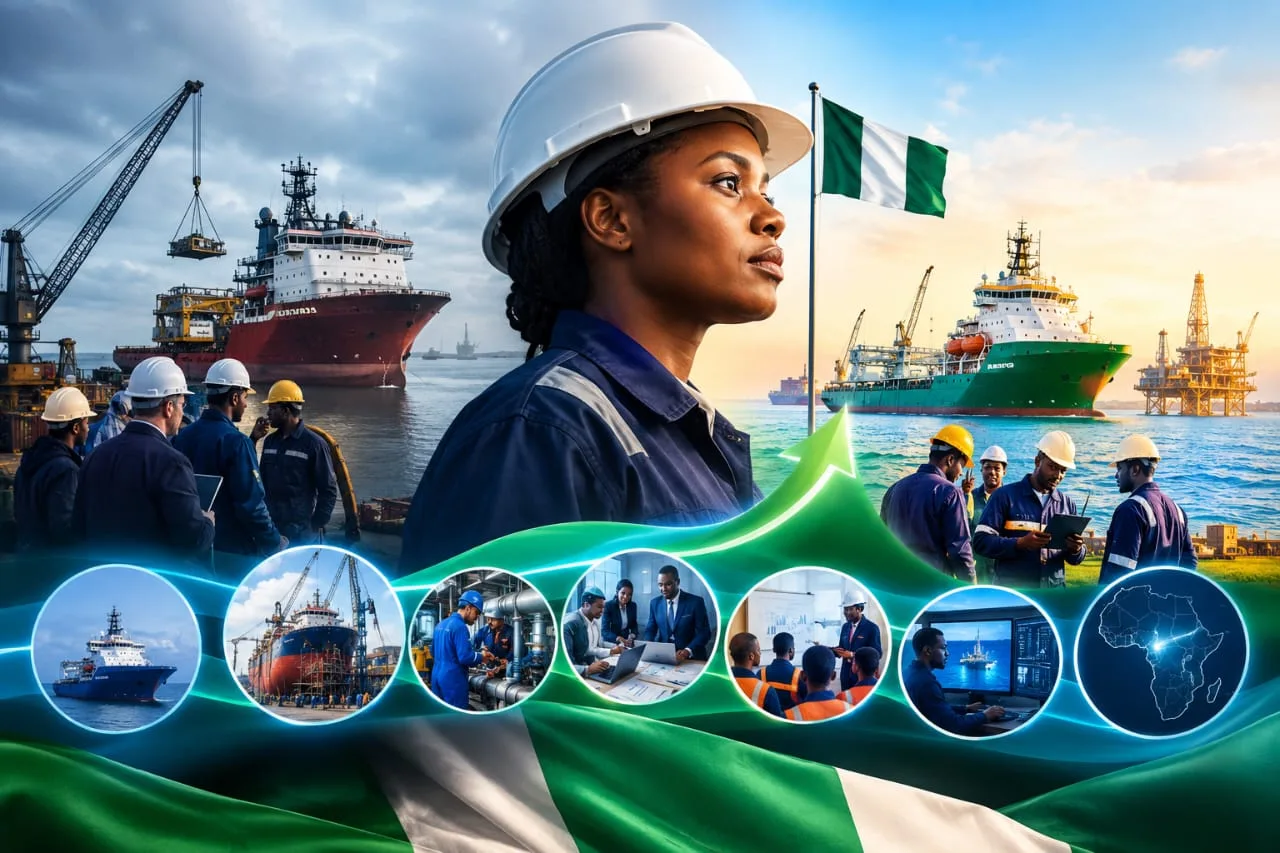
Nigeria does not have a maritime demand problem. It has a conversion problem.
The country generates demand for vessels, marine logistics,
offshore services, engineering, fabrication, surveying, inspection, repairs and
specialised technical expertise. Yet when projects move into more capital
intensive or technically demanding areas, much of the capability required to
deliver them is still developed, financed or controlled elsewhere. That creates
a more difficult question than whether Nigeria has maritime potential.
Why has one of Africa’s largest maritime markets not produced a deeper base of globally competitive maritime companies?
The answer is not simply a shortage of talent, vessels or infrastructure. Nigeria has all three in varying degrees.
The deeper problem is that these resources have not been connected into a system that allows Nigerian businesses to move from participation to ownership, from subcontracting to principal contracting, and from domestic activity to regional competitiveness. That is the capability gap.
THE MARKET IS THERE. THE INDUSTRIAL DEPTH IS NOT
A large maritime market should create opportunities for
companies to specialise, invest, scale and compete. But demand alone does not
create an industry.
A vessel operator needs access to finance and predictable
contracts. A shipyard needs sufficient repair and fabrication demand to justify
investment. An engineering company needs complex projects through which its
technical capability can deepen. A trained professional need sustained
industry exposure to turn qualifications into expertise. When these connections
are weak, the market remains active without becoming sufficiently deep.
Nigeria can therefore have substantial maritime activity
while still relying on foreign companies for higher-value services. That
distinction matters.
LOCAL CONTENT MUST PRODUCE COMPETITIVE COMPANIES
Nigeria's local-content framework has played an important role in increasing indigenous participation, particularly in the oil and gas industry. But participation cannot be the final measure of success.
The Nigerian Content Development and Monitoring Board,
NCDMB, has increasingly placed capacity development, technology transfer,
industrialisation and global competitiveness at the center of its agenda. In
2026, NCDMB, NUPRC and other stakeholders also began work towards a more
harmonised assessment of in country capacities and capabilities.
A local contractor may execute part of a project while
critical engineering, equipment, technology or intellectual property remain
external.
A Nigerian professional may work on an offshore project
without the Nigerian firm retaining the systems knowledge required to execute
the next one independently.
A vessel may operate under Nigerian demand without Nigerian
ownership capturing the asset economics.
The policy objective should therefore become more
measurable.
For major maritime and offshore contracts, Nigeria should be
asking:
What new Nigerian technical capability was developed?
What assets were acquired locally?
What technology or intellectual property was transferred?
What Nigerian companies moved into higher value work?
What can those companies now execute independently or in
another market?
That is a more meaningful definition of local content.
FINANCE MUST FOLLOW THE BUSINESS, NOT JUST THE ASSET
Maritime capability is capital intensive.
A vessel requires financing, but so does the business that operates it. Ship repair requires facilities, equipment and working capital. Offshore engineering requires specialist tools, certification and experienced personnel. Marine technology requires investment long before it generates commercial returns.
This is where financing policy needs to become more
sophisticated.
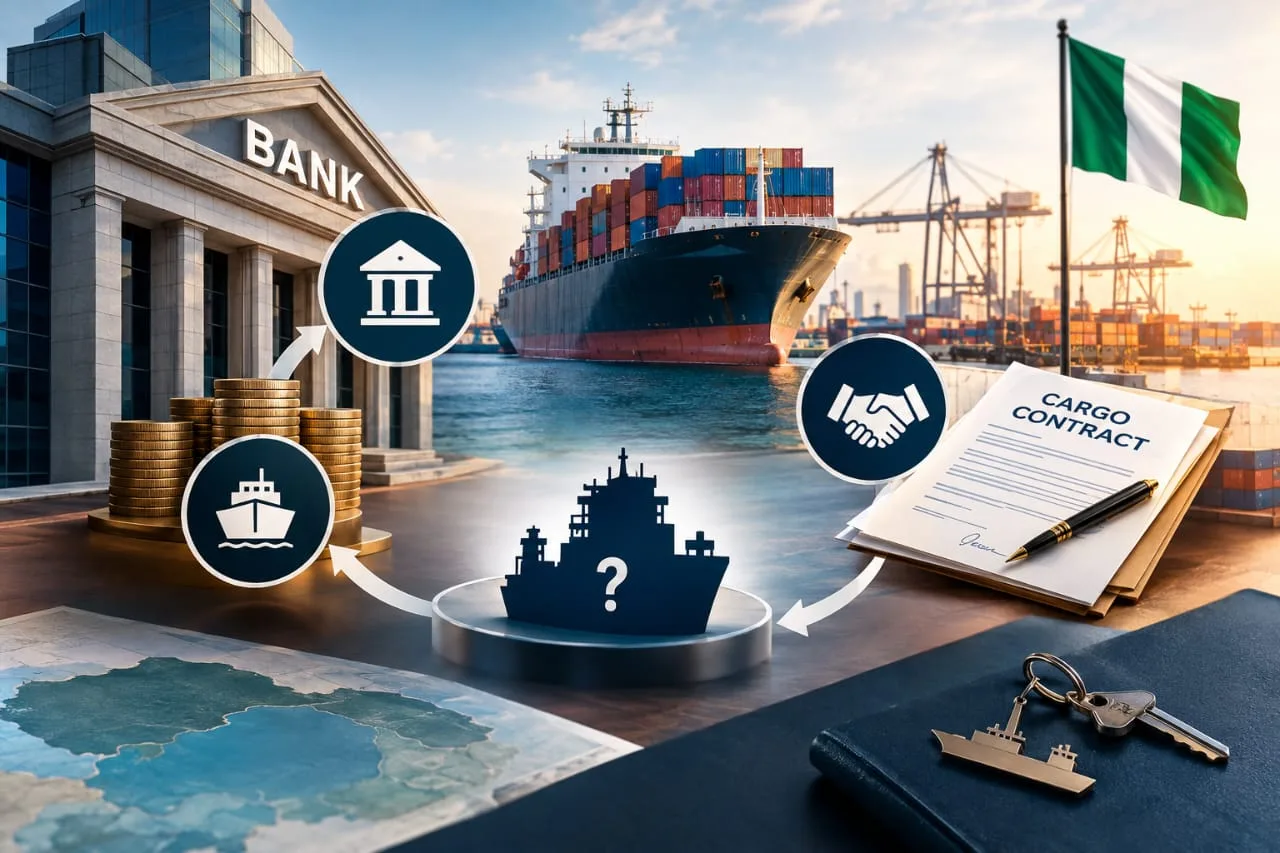
Nigeria has mechanisms such as the Cabotage Vessel Financing
Fund, designed to support indigenous ship acquisition and participation in
domestic maritime trade.
But financing a vessel does not automatically create a
viable maritime company.
The asset must have credible employment. The operator must
have technical and commercial capacity. The financing structure must reflect
the vessel's revenue model. And the business must have a pathway to remain
productive beyond a single contract.
How do we finance more vessels?
to:
How do we finance commercially sustainable Nigerian
maritime businesses?
That means linking maritime finance more deliberately to
contracted cargo, offshore service demand, asset utilisation, operator
competence and long term cash flow.
The skills challenge is similar.
Nigeria has maritime professionals, engineers, seafarers and
technical graduates. It also has people with practical knowledge of its coastal
and inland waterways.
But technical capability is accumulated through experience.
A qualification establishes competence at a point in time. Complex maritime work requires professionals who have operated equipment, solved problems, worked safely in demanding environments and accumulated sufficient experience to take responsibility for increasingly sophisticated assignments. The policy response should therefore go beyond training numbers.
Training programmes should be tied to identified industry
demand, sea-time opportunities, certification pathways and actual projects.
Companies receiving major contracts should have measurable
workforce development obligations linked to the technical work being performed.
It should be to produce professionals and companies capable
of executing increasingly complex work without permanent external dependence.
TECHNOLOGY TRANSFER MUST BECOME MEASURABLE
Technology transfer is another area where policy language
can become too vague.
A foreign company working in Nigeria does not automatically
transfer technology because Nigerians are employed on the project.
That means technology transfer obligations should be tied to
specific outcomes.
Who will be trained?
Which Nigerian company will acquire the capability?
What equipment or systems will be localised?
What technical certification will be obtained?
What work will the Nigerian company be able to perform after
the project that it could not perform before it?
These are measurable questions.
They are more useful than simply reporting the number of
Nigerians employed on a project.
THE SCALE PROBLEM
Even capable Nigerian companies can struggle to move up the
value chain.
A company may have competent personnel but insufficient
capital. It may have equipment but inconsistent contracts. It may have
contracts but lack the scale required for larger projects. It may have domestic
expertise without the certification or commercial relationships needed to enter
regional markets.
Breaking that cycle requires deliberate market development.
Government and major project sponsors should create clearer
pathways for qualified Nigerian firms to progress from subcontractors to
principal contractors.
Procurement systems should reward demonstrated technical
capability, asset ownership, safety performance and delivery history rather
than treating local participation as a box to be checked.
From subcontractor to principal contractor.
From domestic operator to regional service provider.
From user of imported technology to developer of local
solutions.
From participant to competitor.
THE TEST IS WHAT REMAINS AFTER THE PROJECT
This is ultimately a question of value retention.
When a major maritime or offshore project is completed,
Nigeria should be able to identify more than the immediate economic activity it
generated.
More capable professionals.
More productive assets.
Deeper technical expertise.
Greater access to finance.
More technology resident in Nigerian firms.
And businesses capable of taking that accumulated capability
into another market.
This is the difference between hosting maritime activity and
building maritime industry.
Foreign participation is not the problem. Nigeria needs
international capital, expertise, technology and partnerships.
FROM LOCAL CONTENT TO EXPORT CAPABILITY
The next stage of Nigeria's maritime policy should therefore
be judged against a more ambitious standard.
A Nigerian marine survey company should eventually be able
to work across African waters.
A ship repair company should be able to attract vessels
serving the wider Gulf of Guinea.
A Nigerian engineering firm should be able to compete for
offshore work beyond its home market.
A Nigerian owned vessel should be commercially viable
because it serves a real market, not simply because regulation protects its
access to domestic work.
That is when local capability becomes export capability.
And that is when Nigeria's maritime market begins producing
companies with value beyond Nigeria's coastline.
The policy response does not require another broad maritime
strategy document.
Second, connect finance to viable maritime businesses.
Vessel and equipment financing should be assessed alongside contracts,
utilisation, operator competence and sustainable cash flow rather than treating
asset acquisition as the end goal.
Third, make workforce development project-specific.
Training, sea time, certification and technical exposure should be tied to the
actual capabilities required by major projects.
Fifth, measure what remains. Every major maritime or
offshore investment should be assessed not only by capital committed or
production achieved, but by the Nigerian capabilities, assets, companies and
expertise that remain after execution.
That is where policy becomes industrial strategy.
PRIMEAXIS INSIGHT
Nigeria's maritime challenge is not simply that it lacks
vessels, finance, skills or technology.
It is that these elements have not been connected strongly
enough to produce scale.
The country has the market to create maritime companies. It
has the people to develop technical expertise. It has institutions capable of
supporting the sector. It has demand that can justify investment.
What it has not yet built at sufficient depth is the system
that allows capability to compound.
That is the strategic gap.
The next phase of maritime development should therefore
be judged by a different question:
How much stronger are Nigerian companies because that
business happened here?
If Nigeria can answer that question with evidence, it will
have moved beyond local participation.
It will be building maritime power.
And the ultimate test of that power will be simple:
Can the capability developed in Nigeria compete beyond
Nigeria?