Why Africa Must Treat Its Rivers as Economic Infrastructure, Not Just Transport Routes
Africa's competitiveness in the twenty-first century will
not be determined solely by the size of its seaports, the expansion of its
highways, or the kilometres of rail it builds. It will increasingly be defined
by something less visible but far more consequential: how efficiently goods
move between production centres, inland markets, industrial hubs, and maritime
gateways.
This is why inland waterways deserve a fundamental shift in policy thinking.
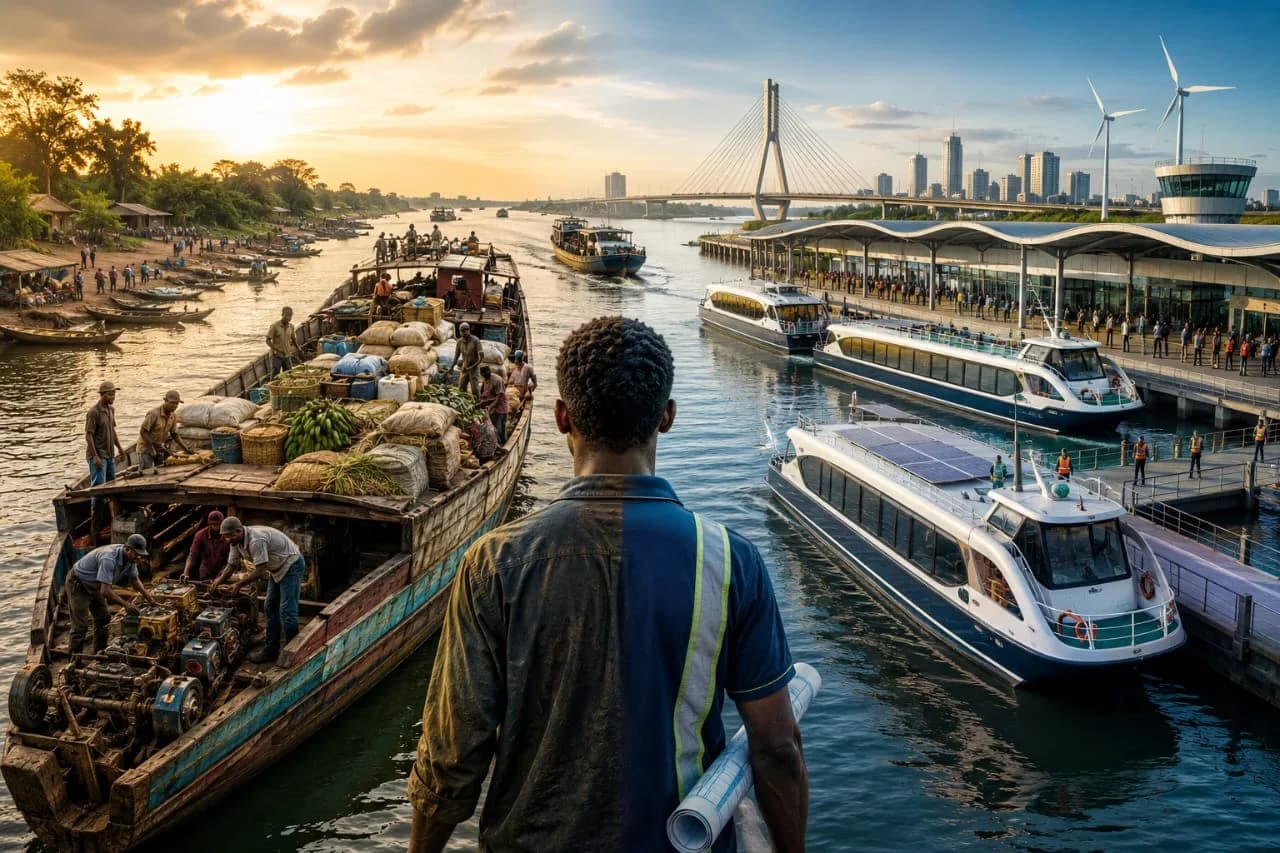
For decades, Africa has viewed its rivers primarily as transport routes. That is a strategic mistake. Inland waterways are not merely channels for moving passengers and cargo; they are economic infrastructure that shapes logistics costs, influences investment decisions, strengthens supply chain resilience, enhances national security, and underpins regional competitiveness.
As the African Continental Free Trade Area (AfCFTA) shifts
from aspiration to implementation, inland waterways can no longer remain on the
margins of transport policy. They must become central to Africa's economic
strategy.
Logistics Is a Competitive Advantage
Global trade is no longer won simply by producing more. It
is won by moving goods faster, cheaper, safer, and more predictably.
Yet logistics remains one of Africa's greatest competitive disadvantages. Heavy dependence on road transport has increased freight costs, accelerated the deterioration of road infrastructure, raised operating costs, and weakened supply chain efficiency.
Every tonne of cargo that unnecessarily moves by road where
inland navigation is viable represents avoidable economic inefficiency.
Inland waterways provide a structural alternative.
Water transport remains one of the most fuel-efficient and cost-effective modes of freight movement. A single barge can transport the equivalent cargo of dozens of heavy-duty trucks while reducing congestion, lowering emissions, and extending the lifespan of road infrastructure.
This is not simply a transport issue.
It is a productivity issue.
It is a competitiveness issue.
Africa's Missing Logistics Layer
Africa possesses one of the world's richest inland water systems. The Niger, Congo, Nile, Senegal, Zambezi and Volta rivers, together with lakes such as Victoria, Tanganyika and Malawi, naturally connect agricultural belts, mining regions, industrial centres and coastal economies.
Yet much of this strategic network remains underutilised.
The problem is not geography.
It is policy.
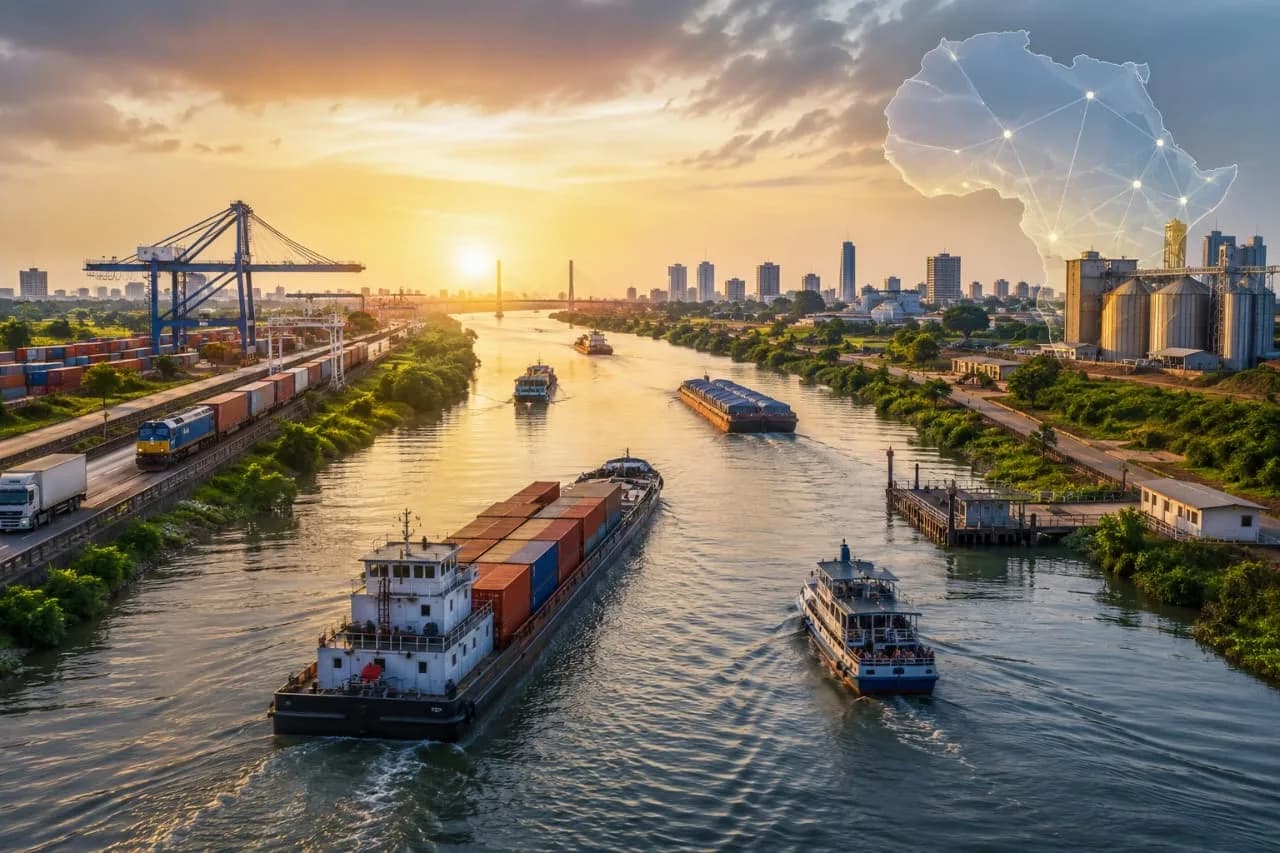
Across the continent, roads, railways, seaports, airports and inland waterways are still planned largely as separate sectors instead of components of one integrated logistics ecosystem.
The result is fragmented infrastructure, higher transport costs and reduced supply chain efficiency.
Roads connect communities.
Railways connect industrial corridors.
Seaports connect Africa to global markets.
Inland waterways connect all three.
Without this missing logistics layer, multimodal transport
remains incomplete, regional trade remains more expensive than it should be,
and Africa's competitiveness remains constrained.
AfCFTA Will Be Won on Logistics
AfCFTA has created the world's largest free trade area by participation.
But free trade agreements do not move cargo.
Infrastructure does.
Reducing tariffs will achieve only part of AfCFTA's promise
if the cost of transporting goods across the continent remains among the
highest in the world.
Trade competitiveness depends as much on logistics
efficiency as it does on trade policy.
This is especially important for Africa's sixteen landlocked countries, whose economic performance depends on reliable transport corridors linking inland production to maritime gateways.
Efficient inland waterways reduce transport costs, expand market access, strengthen regional value chains and improve the commercial viability of cross-border trade.
If Africa is serious about building continental supply
chains, inland waterways must become part of its strategic trade architecture,
not an afterthought.
Nigeria's Strategic Window
Nigeria possesses approximately 10,000 kilometres of inland waterways, with about 3,000 kilometres considered navigable under the management of the National Inland Waterways Authority (NIWA).
Few African countries possess a comparable strategic advantage.
The opportunity extends well beyond passenger ferry services.
An integrated inland water transport system could reposition river ports as logistics hubs, support agricultural and mineral value chains, lower freight costs, reduce pressure on congested highways and improve the efficiency of the national transport network.
Recent developments suggest encouraging momentum. Greater regulatory clarity between NIWA and the Lagos State Waterways Authority (LASWA), stronger safety enforcement, fleet modernisation, improved emergency response capabilities and increased investment in water transport all point towards a more coordinated approach.
Lagos has already demonstrated what is possible.
The next challenge is transforming isolated successes into a
national logistics strategy that integrates inland waterways with roads,
railways, ports and dry ports.
Strategic Assets Demand Strategic Investment
Recognising inland waterways as strategic assets requires
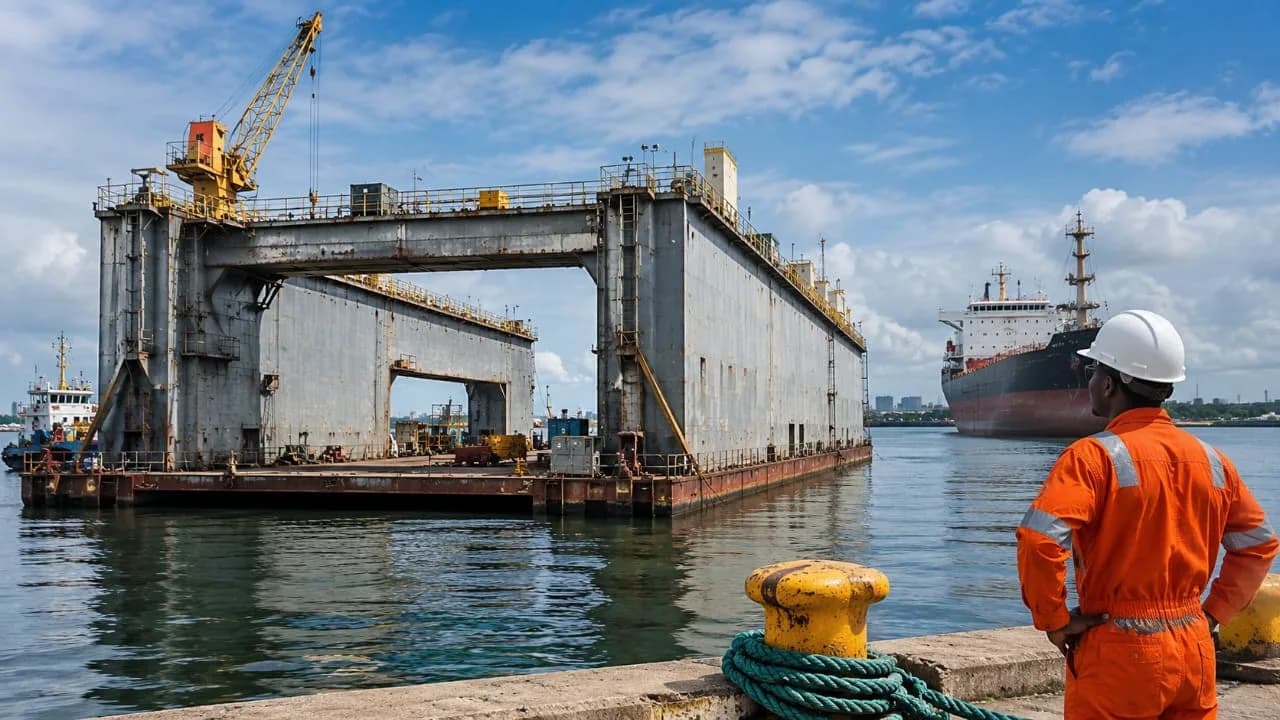
far more than dredging channels or constructing new jetties.
It demands long-term investment in economic infrastructure.
Governments must modernise inland ports, improve
hydrographic surveys, expand navigation aids, deploy digital vessel traffic
management systems, strengthen emergency response capabilities, enforce
internationally aligned safety standards and attract greater private-sector
participation through well-structured public-private partnerships.
Equally important is regional policy harmonisation.
Trade corridors do not stop at national borders.
Infrastructure planning should not either.
More Than Transportation
The true value of inland waterways extends far beyond moving cargo.
Efficient waterways stimulate industrialisation, improve food security by connecting producers to markets, strengthen fisheries, support tourism, generate employment, improve disaster response, reduce carbon emissions and enhance border mobility and national security.
Inland waterways should therefore be viewed not as transport projects, but as economic multipliers.
Countries that recognise this distinction will enjoy lower
logistics costs, stronger regional connectivity and greater long-term
competitiveness.
PrimeAxis Insight
Africa's greatest transport challenge is not the absence of infrastructure.
It is the absence of integration.
For decades, roads, railways, ports, airports and inland waterways have been planned as separate sectors, each pursuing its own priorities. Freight, however, does not move through institutions.
It moves through systems.
The countries that will lead African trade over the next two
decades will not necessarily be those that build the biggest ports or the
longest highways.
They will be those that build integrated logistics ecosystems where ships, barges, railways, roads, dry ports and digital infrastructure function as a single network.
That is why inland waterways matter.
They are not transport alternatives.
They are strategic infrastructure.
They are instruments of trade competitiveness.
They are catalysts for industrialisation.
They are assets of national resilience.
As Africa advances the ambitions of Agenda 2063 and the
AfCFTA, policymakers must stop asking how to move more boats.
They must begin asking how Africa's rivers can become engines of economic power, industrial transformation and continental competitiveness.
The countries that answer that question first will shape
Africa's next chapter of growth.